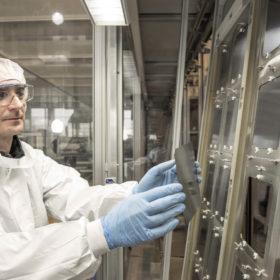
The implications of a messy Meyer Burger-Oxford PV divorce for European perovskites
Last week’s announcement Oxford PV wants to wind up its “exclusive cooperation” with Meyer Burger after the fit out of its 100 MW German factory points to a potential divergence in strategies. And with Meyer Burger considering legal action in response, it could result in a messy, disruptive separation.

UK government launches competition to spur longer duration energy storage innovation
New tech which can store power for longer than four hours can secure up to €14 million each towards their demonstrator project costs.
The Hydrogen Stream: New tech to reduce weight, costs of hydrogen fuel cell vehicles
U.S.-based Hyzon Motors has developed a new onboard hydrogen storage system technology capable of reducing the weight and manufacturing cost of commercial vehicles powered by hydrogen fuel cells. Meanwhile, India’s largest oil provider has announced its first green hydrogen project and the Dutch government has awarded a subsidy contract to an offshore green hydrogen demonstrator.
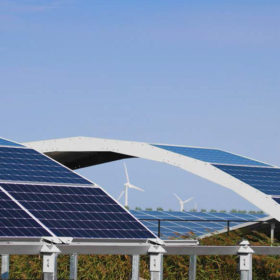
Arc-shaped PV system for agrivoltaics from Germany
The PV mounting system was developed by Germany-based Goldbeck and will initially be available in the Netherlands from 2022. The company will test the new technology in a 45 MW PV project.
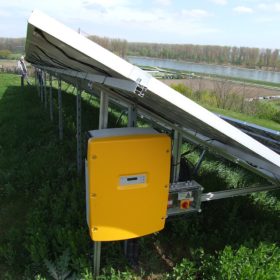
Interoperable SCADA protocols for PV inverters
NREL researchers have developed interoperable SCADA protocols for PV inverters. Two new sets of codes were conceived to enable legacy inverters, which are inverters that are not capable of providing some or all of the grid support functions to participate in advanced distribution management.
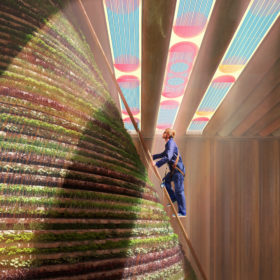
Organic solar panels designed with coloured Moiré effect
French organic PV specialist Armor, and a Dutch designer specialized in integrating PV in furniture, windows and other objects, have provided the module technology for the Netherlands’ pavilion at Expo 2020 Dubai.

US start-up unveils 3.6 kWh portable battery for independent power supply
The system can be expanded to a capacity of up to 25 kW. Its creator – U.S.-based start-up EcoFlow – has already collected almost €4 million on the Kickstarter crowdfunding platform for its portable power supply solution.
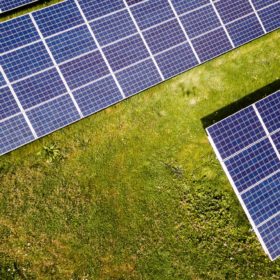
Net zero could be 630-plus gigawatt annual opportunity for solar
Analyst BloombergNEF has gazed into its crystal ball and predicted three routes to a net zero world. The ‘green’ scenario fleshed out in its latest New Energy Outlook is bound to appeal far more to the solar industry than the alternative, nuclear or fossil-fuel-powered outcomes.
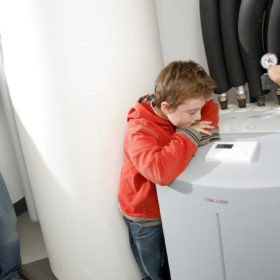
Heat pumps bankable as incentive-free solutions in many applications
Two Italian experts on heat pumps and PV systems recently spoke to pv magazine about economies of scale, the European market, and the maturity of heating tech. The Eurac researchers said currently available heat pumps can run at -20 C and efficiently provide hot water up to 65 C.
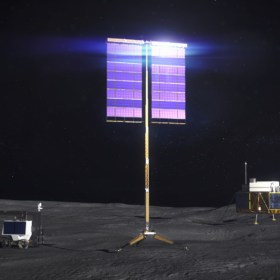
NASA developing 10 kW movable PV array for moon mission
NASA plans to place a solar array on a tall mast to avoid lunar shading and capture uninterrupted light. It will hang a pair of PV cell blankets from a horizontal cross arm supported by the mast, anchored to a deployable tripod base.
