
Best membrane for non-aqueous redox flow batteries
A Chinese-Finnish research team has identified composite membranes as the best future option for non-aqueous redox flow batteries.
Future of cadmium telluride PV tech
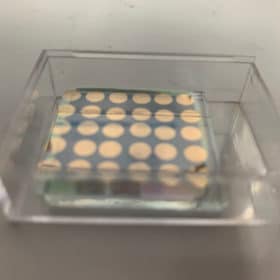
In the third interview of a series, pv magazine spoke to Prof. Arvind Shah of École polytechnique fédérale de Lausanne and Associate Prof. Alessandro Romeo from the University of Verona about the challenges and opportunities of cadmium telluride (CdTe) PV tech. They said there is still potential to ramp up efficiency and cut costs, and claimed that the toxicity of cadmium should not be seen as a serious concern.

Micro III-V solar cell with 33.8% efficiency
Developed by a French-Canadian research group, the triple-junction cell is based on indium gallium phosphide (InGaP), indium gallium arsenide (InGaAs) and germanium (Ge) and has an active area of only 0.089 mm2. It can be used for applications in micro-concentrator photovoltaics (CPV).

Exploring defects in a solid-state electrolyte
Scientists in the U.S. used sophisticated imaging techniques to observe previously unknown defects in the crystalline structure of a solid-state electrolyte. The scientists theorize that these defects could play an important role in the electrolyte’s performance, and that designing them more carefully into the material could have impressive results.
Rooftop CPV-thermal tech to produce electricity and freshwater
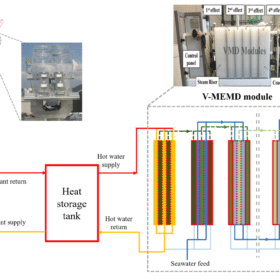
It’s claimed the decentralized desalination system can deliver a levelized cost for desalinated water of US$0.7-4.3/m3, depending on PV costs and electricity prices. It was built with several concentrated photovoltaic/thermal (CPV-T) collectors, a hot water tank, a V-MEMD module, a seawater feed tank, and a distillate tank.
Redox launches high-voltage redox flow storage solution
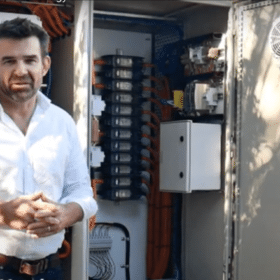
Australia’s Redflow has unveiled its new Energy Pod Z module.

The Hydrogen Stream: Massive hydrogen/green ammonia project in Chile, hydrogen atlas for Germany
Furthermore, Canadian integrated energy company Suncor and Canadian holding company ATCO are looking into a potential “world scale clean hydrogen project” in Alberta, and Japanese energy company Eneos and Japanese multinational automotive manufacturer Toyota Motor, are exploring hydrogen applications at Woven City, a prototype city in Japan.
Exeger ramps up dye-sensitized solar cell production in Sweden
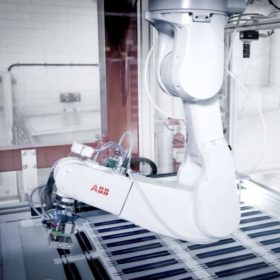
The Swedish company secured $38 million to build a manufacturing facility it has planned with the support of Swiss conglomerate ABB. The factory will be located in Stockholm and produce the company’s Powerfoyle products.
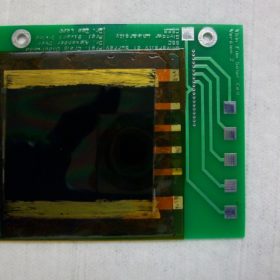
Cadmium telluride solar cells for space applications, BIPV, unmanned aircraft
U.K. researchers have developed a flexible thin-film cadmium telluride (CdTe) solar cell for use in ultra-thin glass for space applications.

‘Hydrogen as a universal climate solution might be a bit of false promise’
Hydrogen and hydrogen-based fuels will not be able to move forward fast enough to replace fossil fuels and tackle climate change, according to a German-Swiss research team that claims direct electrification alternatives are cheaper and easier to implement. The scientists cite too-high prices, short-term scarcity and long-term uncertainty, as the main reasons for their skepticism.
