The best world regions for compressed air storage
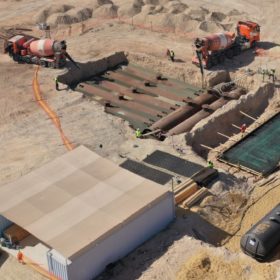
Compressed air energy storage (CAES) may become an interesting solution for countries with weak interconnection with their neighbors, according to scientists from Finland’s Lappeenranta University of Technology (LUT). North America and sub-Saharan Africa were found to have the largest portion of suitable areas for this kind of storage technology, and Western Canada in particular, to have the world’s strongest potential.
Organic solar for optical wireless data receivers
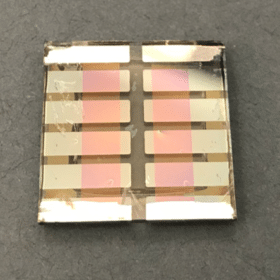
Researchers in the United Kingdom have built a 14%-efficient organic PV device that can be used in high-speed optical wireless communication systems. The cell consists of a 4×2.5mm photoactive layer fabricated with a bulk heterojunction of a polymer donor and fullerene and non-fullerene acceptors.
Solar 101: How to evaluate solar contractors for rooftop projects
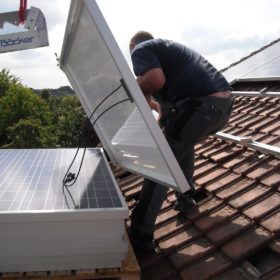
A well-designed rooftop solar system should last 20 or 30 years, or longer. This guide for choosing the right contractor should help ease your concerns.

The Hydrogen Stream: More hydrogen for the ports of Rotterdam and Antwerp
Australia and Chile are both granting funds to green hydrogen projects and Denmark is exempting pilot power-to-gas projects from complying with its energy legislation. Furthermore, the Fraunhofer Institute for Applied Polymer Research IAP is working to find solutions for private customers to produce hydrogen.

New electrolyte boosts lithium-air batteries
Scientists in the UK reported a breakthrough in lithium-oxygen batteries, achieved by experimenting with different electrolyte compositions. Working with ionic liquids, they were able to tweak the electrolyte recipe to minimize unwanted reactions during battery cycling, and greatly improve on both performance and stability.
Recycling rare-earth elements from dead lithium batteries
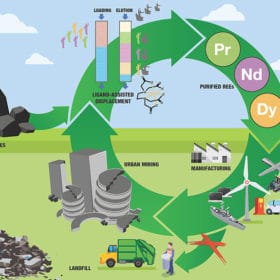
American Resources Corporation is developing a process to separate pure rare earth metals from lithium-ion batteries used in electric vehicles or power plants based on renewable energy. The technique is described as a two-zone ligand-assisted displacement chromatography (LAD) that is able to produce metals with high yields and purity of over 99%.
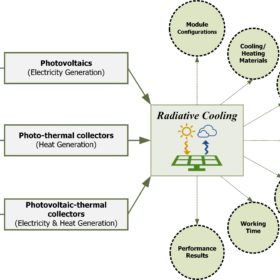
The best radiative cooling tech for PV arrays
Scientists in China have analyzed the radiative cooling techniques used in combination with solar energy systems such as PV arrays, solar thermal collectors, and concentrated PV installations. They identified five major system typologies based on functionality and working time.

Arkolia pairs biogas with self-consumption PV plant
Arkolia has coupled a biogas purification plant in France with a 100 kW rooftop solar array.
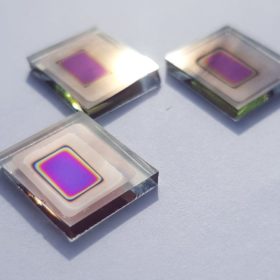
Semitransparent selenium solar cell for applications in tandem devices
The bifacial device showed a power conversion efficiency of 5.2% on the front side through an n-type contact and 2.7% on the rear side through a p-type contact.
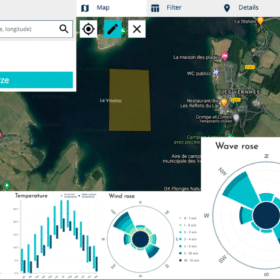
New tech to identify best locations for floating PV
Norway’s Glint Solar and the Norwegian Geotechnical Institute have developed an algorithm that is able to automatically calculate wave heights and wind directions at potential locations for floating PV arrays. It considers the geometry of the water surface as well as 40 years of data on wind conditions.
