
PV-powered reverse osmosis for wastewater treatment
Moroccan scientists have tested reverse osmosis paired with PV generation to maximize chlorophenol rejection in wastewater treatment. They said the tech combination can help to reduce energy consumption.

South Korea to introduce new rules for PV recycling
The South Korean authorities plan to introduce new rules for PV waste recycling in 2023. Several recycling facilities are already being built, including one by the government, with a combined capacity of 9,700 tons.

China will need 1.9 TW of solar by 2060 to hit net zero – WoodMac
The bill for full decarbonization of the economy – which is likely to see the decommissioning of no more than half the current coal fleet, with CCS doing some heavy lifting, according to the US-owned analyst – could come in at more than $5 trillion.

Schneider Electric launches off-grid-capable solar charge controller
The power electronics company is offering a product which can work on and off the grid and enables the charging of dead batteries using a rooftop solar array.
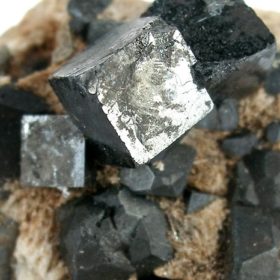
Bifacial perovskite solar cells may become more eco friendly than crystalline ones
A US study has suggested the raised energy yield of bifacial perovskite devices effectively means they could have a lower environmental impact than conventional crystalline cells. The researchers considered single-junction cells with high and low bandgaps and similar, multi-junction devices with two and four-terminal structures.
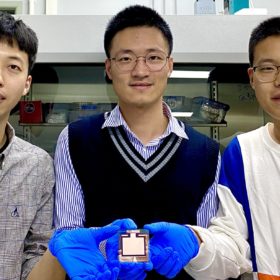
Additive allows all-perovskite tandems to hit 24.2% efficiency
Scientists led by China’s Nanjing University discovered that a chemical commonly used for bleaching in the textile industry can also serve as a performance-boosting additive to mixed lead/tin perovskite thin films. Using this additive, they were ultimately able to fabricate a two perovskite tandem cell measuring 1.05cm² that achieved 24.2% efficiency.
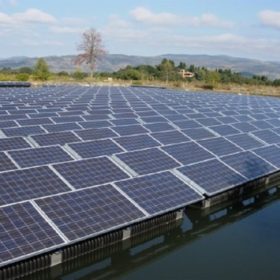
Investigating bifacial for floating PV
Scientists led by the University of Ontario modeled the performance of bifacial modules in floating PV applications, finding that in a north/south orientation at a 30 degree angle, the modules could receive as much as 55% more sunlight than a monofacial module in the same setup.

Gallium arsenide phosphide tandem solar cell with 25.0% efficiency
The demonstrated device, according to the academics, is built with interfaces between the active cell layers that improve the top cell carrier collection. The cell was built with texturing and a hydrogenated amorphous silicon (a-Si:H) passivation of a silicon back surface.

Copper metallization process reaches pilot production in Germany
Scientists led by staff from Germany’s Fraunhofer ISE have demonstrated a new laser printing process in pilot production, which could replace silver paste and screen printing in solar cell manufacturing. The system is said to offer much more flexibility in the layout of contact fingers on the cell surface and a wider choice of metallization materials.

Improving outdoor I-V curve measurements with PV module irradiance sensors
Japanese scientists have replaced common pyranometers with PV module irradiance sensors to measure the I-V curves of crystalline silicon PV modules. The sensors provide highly precise outdoor measurements, the researchers said.
