
Bifacial perovskite-silicon tandem cell with 25.2% efficiency
International researchers have developed a silicon heterojunction PV cell with textured surfaces to accommodate the perovskite top cell. They optimized the rear transparent electrode to collect as much albedo as possible and achieved five different perovskite bandgaps by altering the iodide-to-bromide ratio in the perovskites, resulting in a higher open-circuit voltage.
Anti-soiling nanocoating for large-scale PV
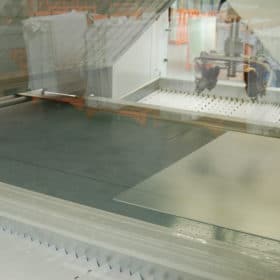
Dutch company Rads Global Business has developed an anti-soiling coating for solar PV modules that is claimed to reduce cleaning cost by around 60%. The anti-reflective and anti-corrosive coating is also said to mitigate potential-induced degradation (PID).
Seawater aqueous battery based on alloy of zinc and manganese
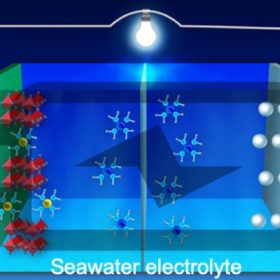
Scientists in the United States developed a new anode for aqueous batteries. A working battery utilizing this anode, with seawater as an electrolyte, demonstrated impressive energy density, and remained stable after 1,000 hours of high current cycling. The group is already discussing the potential of their approach in large-scale manufacturing.

Spanish PV struggling with snowfalls caused by Storm Filomena
While Spain is struggling with the largest snowfall since 1971, pv magazine editor Alejandro Diego Rosell has asked two Spanish experts what the consequences of the massive snow loads produced by Storm Filomena will be on solar installations. According to them, some PV systems may stop working completely and component failures may not be excluded.
Stretchable CPV module with 15.4% efficiency
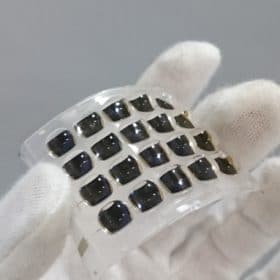
Japanese scientists have fabricated a prototype CPV panel that could be applied on spherical surfaces with a curvature radius of 100 mm, and under outdoor one-sun irradiation. The module is based on a silicone concentrator lens, a thermoplastic polyurethane sheet, and a rigid III–V triple-junction solar cell.
Australia wants to certify green hydrogen with German expertise
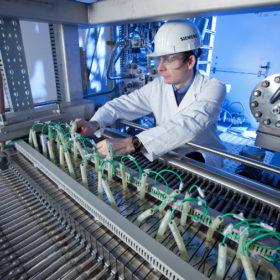
The Australian Smart Energy Council and Deutsche Energie-Agentur will work together to develop a scheme to certify renewable hydrogen and carbon-neutral power fuels.
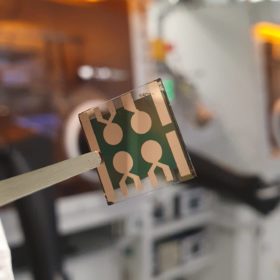
Inverted perovskite solar cell with 21.1% efficiency and high moisture resistance
Australian scientists have built a perovskite solar cell based on 2D and 3D salts. By adding a fluorinated lead salt in the processing solution – normally used to form 3D methylammonium lead iodide – they were able to achieve a 21.1% efficiency, an open-circuit voltage of 1.12 V, a short-circuit current of 22.4 mA/cm2, and a fill factor of 84%.
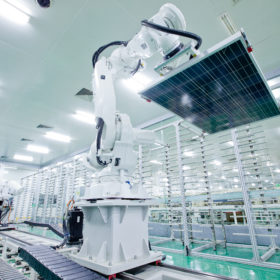
JinkoSolar announces 23.01% efficiency for n-type monocrystalline panel
The PV module relies on Jinko’s TOPCon mono cell technology, for which a record efficiency of 24.9% was announced last week. TÜV Rheinland has confirmed the result.
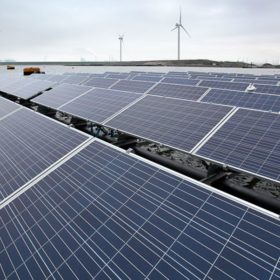
System design key to enhancing cooling effect of water in floating PV
Researchers in the Netherlands and Singapore have measured irradiance-weighted average temperatures of floating PV systems in both countries and have compared the results with reference rooftop and ground-mounted PV systems. They have discovered that floating PV systems with open structures, which allow wind to pass beneath the modules, can provide a higher heat loss coefficient.
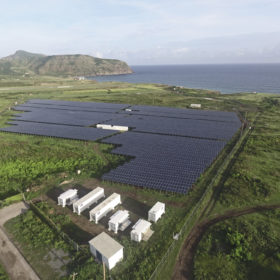
New method to build microgrids based on solar, hydrogen
The use of polymer electrolyte membrane fuel cells as backup power generation in solar microgrids could drive down costs and improve efficiency, according to an international group of researchers. They have proposed a new energy management system that could be ideal for hybrid solar-hydrogen microgrids in remote locations.
