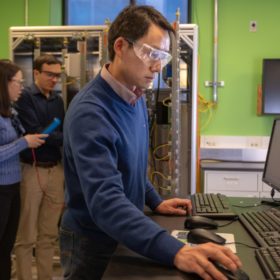
General Electric works on grid-forming inverter controls
The U.S. conglomerate plans to deploy and test new controls with its commercial PV LV5 inverter platform. It aims to develop “grid-forming” controls to allow wind and solar inverters to form voltage and frequency levels like traditional generators. The company wants to improve coordination and synchronization among multiple grid-forming resources, and is working on smart PV reserve controls to improve the transient stability of systems with high renewables penetration.
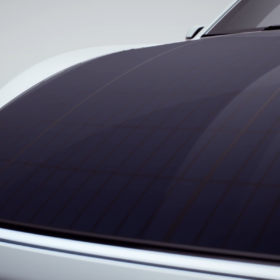
It’s a good idea to charge an EV with solar when we’re socially distanced
Is there any good reason for putting solar on a Tesla Cybertruck? Or is it just virtue signaling? On the other hand, how far are you driving tomorrow? Do you have range anxiety or just general anxiety?
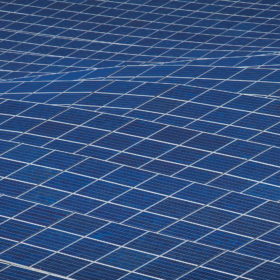
No such thing as ‘next-generation’ modules
According to one Dutch scientist, the development of PV technology in recent decades should be seen as an evolutionary process, rather than the constant emergence of new generations of equipment.
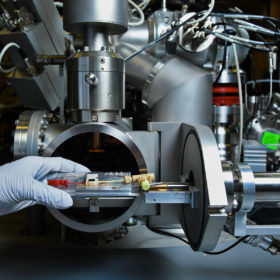
Carbon nanotubes pave the way for silicon in storage
Scientists in the United States have developed a carbon nanotube method of fabricating a lithium-ion battery with a silicon anode. The device reportedly demonstrated better than 87% capacity retention after 1,500 cycles. The developers say their discovery overcomes many of the obstacles to the use of silicon as an anode and could open up the use of other materials for electrodes in lithium-ion devices.
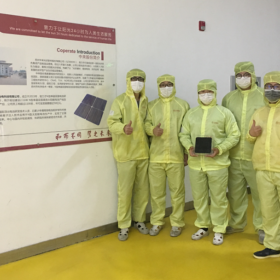
TOPCon technology hits 23.5% in mass production
Chinese manufacturer Jolywood claims it has reached 23.5% cell efficiency on the production lines for its n-type TOPCon technology. The achievement, which has not been verified by a third party, represents a 0.3% improvement to Jolywood’s reported mass production efficiency.

Solar pump moved by fuzzy logic
Researchers in the United Arab Emirates have proposed a PV-powered irrigation system that runs on a fuzzy logic-based algorithm, with a remote-control wireless monitoring system interface.
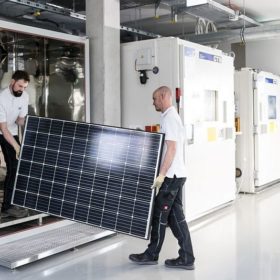
Preventing PID at 1500 volts
Scientists in Germany have developed a “heavy duty” test to provide insight into the long term effects of potential induced degradation in PV modules. The tests go well beyond those established by IEC standards and seek to guide manufacturers and investors on the best choice of materials – encapsulants in particular – when it comes to long term PID resistance.
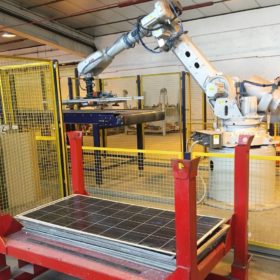
A mechanical technique for PV module recycling
An Italian consortium has developed a panel recycling process it claims can recover up to 99% of raw materials. The developers claim their technique takes only 40 seconds to fully recycle a standard panel, depending on size and recycling site conditions.

A good year for solar: Agrivoltaics in vineyards
French agricultural PV specialist Sun’Agri has revealed the results of tests run on a solar plant integrated with viticulture. During heat waves, the company said, vines shaded by solar panels continued to grow and needed less water.

Focus on the negatives: A new path to highly efficient tandem cells
Scientists in the U.S. and South Korea have identified what could be a new route to high-efficiency perovskite-silicon tandem solar cells. Through engineering negatively charged particles in the passivation layer, the group made a tandem cell with 26.7% efficiency. With further tweaks to the silicon layer they expect to be able to surpass 30%.
