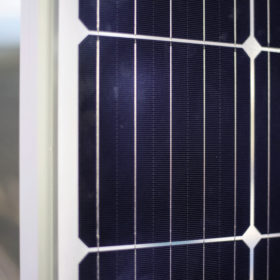
European researchers seek standard to assess short-circuit current temperature of PV devices
A European research team working on the EU-funded EURAMET ENG55 “PhotoClass” project has taken a step toward standardizing the measurement of the relative temperature dependence of the short-circuit current in different PV devices, although it applied completely different approaches.

MIT develops ‘hybrid’ cathode for smaller, lighter batteries
Scientists at MIT have developed a new type of “hybrid” cathode for lithium batteries, which they say could increase their energy density beyond that of current commercial lithium-ion battery designs.

Perovskites: A solar scientist’s bread and butter
University of Groningen in the Netherlands is adding its name to the growing list of research institutes that have developed an “industrially scalable” technique for the production of perovskite solar cells. In a separate publication, Russian scientists have reviewed the suitability of one group of perovskite materials for use in space.

Sentis Capital intensifies call for change at Meyer Burger with new website
Meyer Burger Technology’s largest single shareholder has followed up on its recent call for the Swiss technology group to embark on a new strategic path by launching a new website.
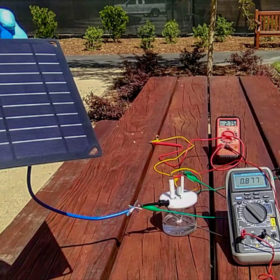
Water, water everywhere, nor any drop to… split?
Researchers at Stanford University have developed a type of electrode which is highly resistant to salt corrosion, therefore allowing them to produce hydrogen using seawater. Applied at a larger scale, this development could potentially cut the cost of power-to-gas applications by greatly increasing the amount of water available.

QMC licences quantum dot, thin film cell technology for Indian manufacture
Indian company Amtronics CC has paid Quantum Materials Corp an initial $500,000 as part of an agreement securing the right to manufacture quantum dots and thin-film quantum dot solar cells based on QMC technology for commercial supply in India. Construction has already started on a manufacturing facility in the state of Assam.
Meyer Burger joins the fray over Hanwha patent infringement claims
The Swiss solar equipment maker has endorsed a claim by Chinese solar manufacturer Longi that the technology it uses differs from that at the center of Hanwha Q Cells’ patent infringement complaints.
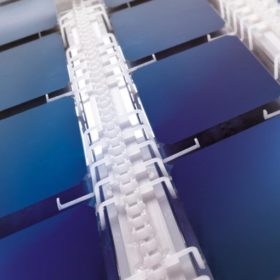
ITRPV tenth edition: Module prices fell almost a third in 2018
German engineering association the VDMA expects PV system prices to continue to fall, as set out in the latest International Technology Roadmap for Photovoltaics report. Falling production costs and rising cell and module performance levels will secure long term competitiveness for PV in the energy mix, says the report. VDMA estimates global production capacity for PV modules reached 150 GW last year.
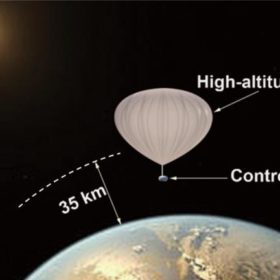
In space, stability of perovskite cells is not an issue
A Chinese research team has tested large-area perovskite solar cells by sending them into near-earth orbit at 35 km, and has discovered the near lack of oxygen and moisture is good for their stability.

The blockchain club
Open-source blockchain platform Energy Web Foundation has revealed the number of its affiliates has risen from 37 to 100 in recent months. New members include EnBW, Total and a unit of the State Grid Corporation of China. The platform was conceived to create an energy-blockchain ecosystem and to accelerate the energy transition.
