
Interview: ‘Technological innovation… the main cost driver’
After close to a decade of dramatic module cost declines, a new era of subsidy-free, utility-scale PV projects in dawning in Europe. But rather than ever-cheaper commodity modules, Radu Roman expects that technological innovation, particularly at the module level, will boost performance and continue solar’s subsidy-free expansion. Roman is Jinko Solar’s product and business development manager for Europe and will be a panelist at the Future PV Roundtable in Munich on Wednesday, May 16.

LONGi launches new high-powered half-cut bifacial module
The Hi-MO 4 offers power ratings up to 430 watts, with module efficiencies as high as 19.2%, as the latest high-powered module to hit the floor at Intersolar Europe.
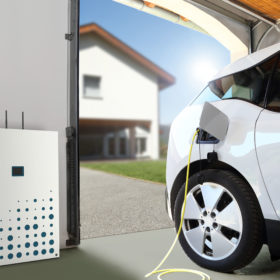
EVs may account for more than half of global car sales by 2040: BNEF
Electric vehicles could account for more than half of all passenger cars and buses sold throughout the world within the next two decades, according to a new report by BloombergNEF. Sliding lithium-ion battery costs will make EVs cheaper than vehicles based on internal combustion engines by the mid- to late-2020s, the research firm says.

Vikram Solar announces long-duration PV reliability test results
Tests by U.S.-based PV Evolution Labs (PVEL) show that monocrystalline silicon and polycrystalline silicon PV modules produced by India’s Vikram Solar met and exceeded international quality and performance benchmarks.
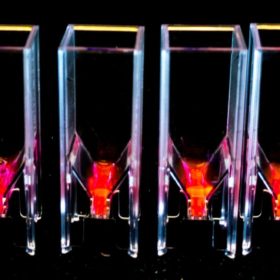
Organic PV all at sea thanks to new observations
Scientists seeking the next generation of highly efficient PV devices have found inspiration in nature. Researchers from the U.K.’s University of Birmingham and the University of Utrecht, in the Netherlands, examined the light harvesting mechanisms in ocean microalgae that are said to be up to 95% efficient.

UK researchers seek to use perovskite solar cells for hydrogen production
A research team has applied a waterproof coating obtained from graphite to a perovskite cell intended to power the production of hydrogen underwater. The cell is said to have worked underwater longer than expected.

UK scientists build new 3D solar architecture
The back-contact solar cell is said to have a conversion efficiency of around 7%. According to researchers, the cell design includes the removal of expensive transparent conductive oxides.

Longi claims new record for bifacial half-cut module as production equipment orders pour in
The Chinese monocrystalline panel maker said its 72-cell bifacial product has reached an ouput of more than 450 W on the front side. The result was confirmed by Germany’s TÜV-SÜD.
Indian engineering giant Bharat Heavy Electricals to work on e-mobility
Government-owned Bharat Heavy Electricals and the Automotive Research Association of India will combine their respective strengths in technology development and testing and certification to work on electric and trolley buses, EV chargers and battery and charger testing.
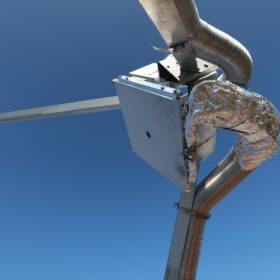
Scientists concentrate on efficient hydrogen production
Researchers from the Laboratory of Renewable Energy Science and Engineering at Switzerland’s Ecole Polytechnique Federale de Lausanne have developed a device which they say could “provide a pathway for device scalability aimed towards the large scale deployment of photo-electrochemical hydrogen production”.
