
A new perovskite material for solar applications
Barium zirconium sulfide is another chalcogenide perovskite being tested in relation to the development of more efficient solar cells. Researchers at Buffalo University, in New York state, have created a thin-film based on the material they say offers significant light absorption and good charge transport.
Best-worst method applied to select solar project locations
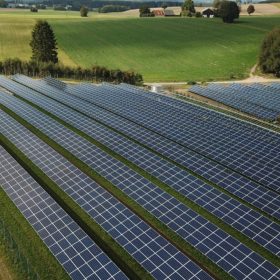
Scientists at the Beijing Institute of Technology have identified the most suitable areas for solar parks in the Chinese capital using a geographical information system and a new multi-criteria decision-making technique: the ‘best-worst’ method. They claim the approach can help establish technically and economically viable projects.

UK researchers confirm correlation between micro-cracks and hot spots in polycrystalline cells
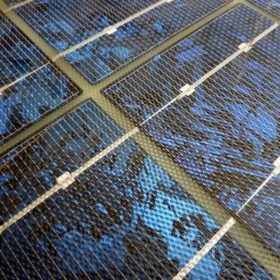
A research team from the University of Huddersfield used electron microscopy to analyze micro-cracks in 4,000 polycrystalline silicon solar cell samples. The results showed power losses may vary from 0.9-42.8%, and increased temperatures due to micro-cracking may favor the formation of permanent hot spots in the cells.

New lithium-sulfur battery unveiled by Aussie scientists
Scientists at Monash University claim to have developed the world’s most efficient lithium-sulfur battery. They say the new device could enable an electric vehicle to drive more than 1,000km on a single charge.
US scientists claim clear-sky irradiance model provides better results for module testing
Researchers at the American Institute of Physics have used the clear-sky irradiance model developed by the National Renewable Energy Laboratory to measure the degradation rates of solar panels at a testing field in Germany over five years. The scientists say the model, when combined with real-world data, offers an efficient tool to evaluate the aging of PV technology.

PV against brain and heart diseases
Researchers in Denmark have developed water-based nanofibers coated with a biological PV substance which can be easily injected into the body. The developers say excitable cells in the heart and brain could be regenerated by being electrically stimulated with the solution.
Solar-plus-storage will start to make big inroads in the year ahead
By this time next year we may be able to wave goodbye to that old chestnut about renewables endangering security of supply. Elsewhere, the price of lithium – and the products it goes into – could go either way after tanking this year.

U.S. research teams aim for long-duration storage at $0.05/kWh
To get long-duration storage costs down to $0.05/kWh, research teams funded by ARPA-E are pursuing breakthroughs in flow batteries, hydrogen storage and other technologies – even thermovoltaics.

The year in solar, part IV: More storage and hydrogen advances as solar just kept getting cheaper
Battery innovations started to come thick and fast this quarter as the hunt for alternatives to lithium-ion intensified and the latest slew of solar tenders indicated the relentless pressure on solar power generation costs was showing no sign of abating.

The year in solar, part III: Battery breakthroughs, inverter trouble, sustainable role models and new tech
Storage has long been expected to be the handmaiden of a renewable energy world and its long awaited advances started to finally emerge in the third quarter as researchers posited R&D achievements ranging from potentially potent tungsten disulfide nanotubes to the business case for 10-year solar panels.
