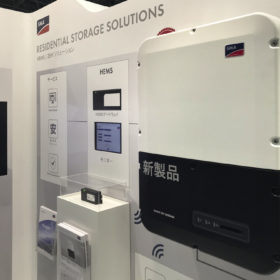
SMA launching new multi string battery inverter
SMA says its new product will offer digital services such as monitoring and automatic notifications to perform maintenance as well as offering an emergency supply system. According to analysts, the varied applications of new inverters signal an increasingly competitive marketplace.
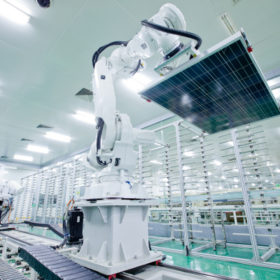
JinkoSolar hits new output records for p-type and n-type
Chinese module giant JinkoSolar today announced that it hit record power output levels for modules based on p-type and n-type technology. Both records are confirmed by TÜV Rheinland in Shanghai.

Silver prices to fall by $4/toz by 2030, World Bank says
A recently published report on commodity markets published by the World Bank indicates that the recent decline in commodity prices for silver is likely to continue over the next 10-20 years. The looming trade dispute between the U.S. and China is impeding investor trust, as future outlook remains murky.
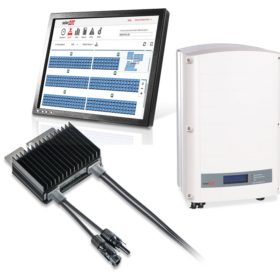
SolarEdge posts 82% revenue growth, announces acquisition of Gamatronic
GAAP gross margin improved 4% year-on-year, while shipments grew by 345 MW in the most recent quarter. Through the acquisition of the U.S.-based UPS provider, the Israeli inverter supplier makes its first move outside of the pure-play solar sector.
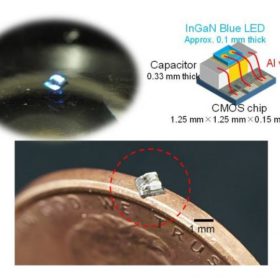
Japanese scientists develop wireless optical neural stimulator based on PV
A very small implantable device that can be used to control brain patterns has been developed by Japanese researchers using photovoltaic technology. The device is both the smallest and the lightest wireless optical biodevice to have ever been developed.
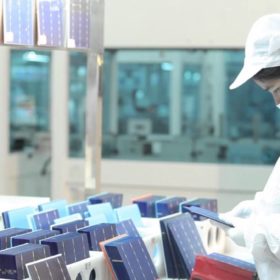
JinkoSolar achieves 23.95% efficiency for p-type mono cell
Chinese module manufacturing heavyweight JinkoSolar has announced the achievement of a new world record efficiency for a p-type monocrystalline silicon cell, at 23.95%. The record has been confirmed in testing by the Chinese Academy of Sciences.
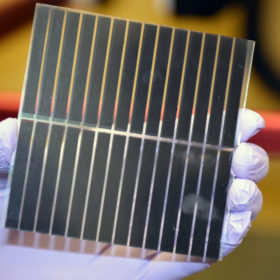
Japanese scientists use manganese to boost perovskite cell performance
Researchers working on inorganic perovskites at the Energy Materials and Surface Sciences Unit at the Okinawa Institute of Science and Technology Graduate University (OIST) in Japan have found that doping with manganese can significantly improve the performance of wholly inorganic perovskite solar cells.

AT Solar builds innovative storage project based on hydrogen in Sweden
The goal of the project, RE 8760 is to show how the storage of renewable energies can make them usable all year round. The generated solar power is stored and converted into hydrogen. It can also be conserved over long periods and used to recharge fuel cell vehicles during the dark winter months.
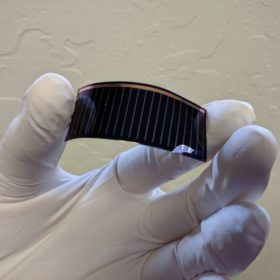
Alta Devices launches new solar cell for vehicle integration
U.S. technology company, Alta Devices has launched a new gallium-arsenide based solar cell, which it says improves on the power to weight ratio of its previous cell by 160%. The cell is designed to provide lightweight, high efficiency generation for integration with cars, drones and other vehicles.

Berkeley Lab scientists discover coating to capture near infrared light
A team of researchers the United States Department of Energy’s Lawrence Berkeley National Laboratory has discovered a method of coating particles with organic dye, which can capture near infrared light, a breakthrough which, according to the researchers, could greatly boost solar cell efficiency by capturing a larger section of the light spectrum.
