SERIS aims for 24% efficiency for mono PERC cell
The Singapore research institute will cooperate with China’s Ruxing Technology to increase the efficiency of its monoPoly™ technology. Through this cooperation, SERIS believes its solar cell efficiency could be raised to 24%, and module power beyond 345 W.
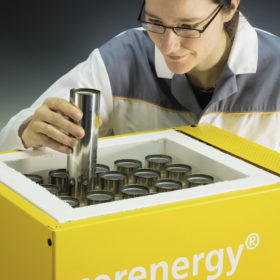
Storage Highlights Countdown #7; Ceramic high temperature battery Fraunhofer IKTS
The Energy Storage Europe conference is nearing and pv magazine is featuring the top ten developments in the field as our Energy Storage Highlights, selected by an independent jury of experts. We continue our ranking with a renewed approach to a storage technology which appeared in the 1970s.
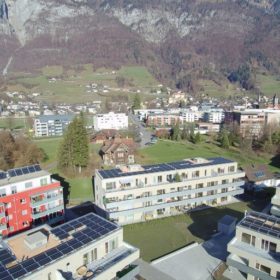
Blockchain marketplace for PV power trading launched in Switzerland
Some 377 households and a retirement home are participating in a pilot project. In the first two weeks of this month, solar power generators sold 82% of their electricity within the neighborhood. The goal of the one-year test run is to develop a viable concept for the local marketing of solar power.

China to engineer a gigawatt-scale PV plant – in space
Plans were broadly sketched out in the nation’s twelfth five-year plan, in 2008. Since then China’s Defense Science and Technology Bureau has supported key technology research. An initial, megawatt-scale project is planned in the stratosphere sometime in the 2021-2025 period.

Researchers upcycle plastic waste into battery anodes
A new approach could extract carbon from polyethylenes in a cost-competitive way, that could be scaled up. Researchers have also performed electric testing with the extracted carbon and found it suitable for use as anodes in Li-ion batteries, among multiple other uses.

Flying the – 4 milliwatt – flag for piezo/solar renewables
Scientists at the U.K.’s University of Manchester have developed a flag which can harvest solar and wind energy while hoisted. The banner, say the researchers, can generate up to 4 mW of energy, and could be used to power remote sensors or small electronic devices.
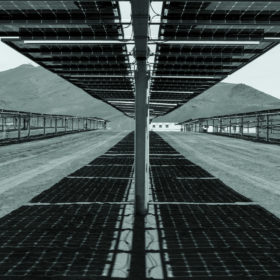
Understanding bifacial boost
Belgian research institute imec has developed a new simulation framework it says can calculate the expected output of a bifacial PV system. The model could help improve developer understanding of the best system configurations for bifacial, and foster confidence among investors by providing a precise prediction of energy yields.
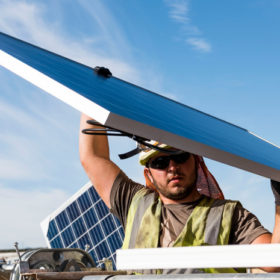
Financial backing for study of grid effects in Australia’s booming distributed generation market
The Australian Renewable Energy Agency has awarded AU$9.6 million in grants for five projects and seven studies into the role of distributed generation assets on the grid – and how to expand their penetration.
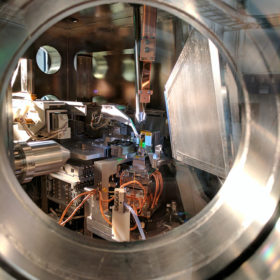
Understanding why cesium and rubidium salt improve the yield of perovskite solar cells
The addition of either salt enables more even distribution of halide atoms within the perovskite material – key to increasing cell conversion efficiency. The explanation should speed up the process of identifying the best perovskite mixes.

Large-scale solar arrives in Quebec
State-owned utility Hydro-Quebec will deploy its first 10 MW of ground-mounted solar to test the technology at the province’s latitude. The hydropower company is also using storage to better manage winter peak demand. Bifacial modules will be included in both projects.
