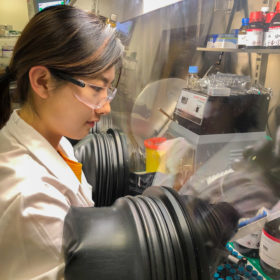
Best of both – quantum dot and perovskites team up for stable performance
Perovskites and quantum dot solar cells both have potential for use in high efficiency PV devices, but have major challenges to overcome to be a commercial reality. Scientists at the University of Toronto have found that if the two technologies are combined in the right way, they can stabilize each other.
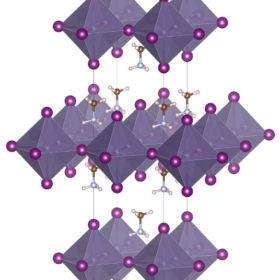
Looking past perovskites
Researchers at the University of California, San Diego – with the help of the university’s Comet supercomputer – modelled thousands of halide compounds to come up with a shortlist of 13 materials that could be candidates for the efficient solar cell materials of the future.

Scientists cast light on how potassium can fix perovskite cells
Doping perovksite solar cells with potassium is said to eliminate interface trapping defects and mobile ion migration. ‘Hysteresis suppression’ is key for more efficient cells based on the promising material.
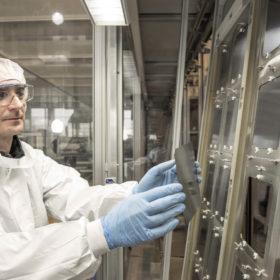
Europe bets on perovskite
Europe’s most important scientific research institutes have joined forces to make perovskite solar applications more than just a dream. The European Perovskite Initiative consortium is planning to draw up a perovskite white paper.

Dutch scientists use fluoride to make perovskite solar cells more stable
Researchers claim the cell they have developed is able to retain 90% of its efficiency after 1,000 hours under extreme light and heat conditions.

Solar leads all forms of energy in digitalization: DNV GL
In a recent survey, DNV GL found that demand for blockchain-related skills in the solar sector is 50% higher than in other energy industries, while 33% of respondents said that the use of drones is having a significant impact on their businesses. However, the solar industry needs a common framework to help advance digitalization further.

ABB, Evolvere jointly launch blockchain energy pilot
The Swiss power group and Italian utility Evolvere have started a blockchain pilot project designed to facilitate transparent, secure peer-to-peer energy trading.

Interview: ‘Technological innovation… the main cost driver’
After close to a decade of dramatic module cost declines, a new era of subsidy-free, utility-scale PV projects in dawning in Europe. But rather than ever-cheaper commodity modules, Radu Roman expects that technological innovation, particularly at the module level, will boost performance and continue solar’s subsidy-free expansion. Roman is Jinko Solar’s product and business development manager for Europe and will be a panelist at the Future PV Roundtable in Munich on Wednesday, May 16.

LONGi launches new high-powered half-cut bifacial module
The Hi-MO 4 offers power ratings up to 430 watts, with module efficiencies as high as 19.2%, as the latest high-powered module to hit the floor at Intersolar Europe.
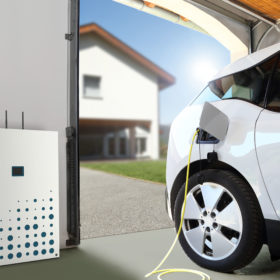
EVs may account for more than half of global car sales by 2040: BNEF
Electric vehicles could account for more than half of all passenger cars and buses sold throughout the world within the next two decades, according to a new report by BloombergNEF. Sliding lithium-ion battery costs will make EVs cheaper than vehicles based on internal combustion engines by the mid- to late-2020s, the research firm says.
