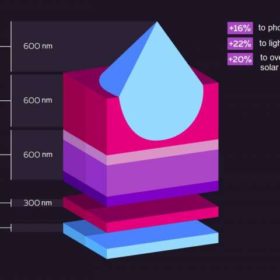
New coating steps up solar cell efficiency by 20%, Russian researchers find
By putting silica particles inside the top electrode, scientists from Russia’s ITMO University have developed a new solar cell coating, which helps avoid overheating and diminishes light reflection, thus increasing overall efficiency by 20%.
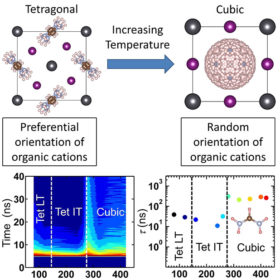
Rotating molecule discovery could bring higher efficiencies to perovskite PV
A team of researchers led by the University of Virginia in the USA has discovered that rotating molecules within a solar are one of the key mechanisms behind the high levels of conversion efficiency seen in perovskite solar cells. The discovery could allow scientists to select and design new materials capable of even more efficient PV generation.
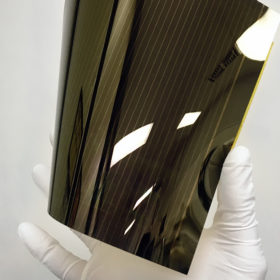
Solliance hits new perovskite milestone
European research group Solliance has announced new conversion efficiencies of 13.5% (cell) and 12.2% (module) for its perovskite based PV technology. The group states that the records were achieved in a factory setting, using an industrially scalable roll to roll process.
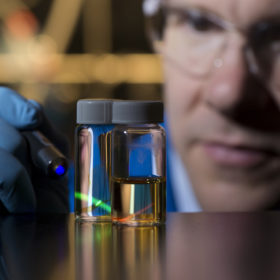
UCI scientists develop new type of solar generation
A team of researchers from University of California, Irvine (UCI) has developed a device which which converts sunlight into electricity through the motion of ions, rather than through excitement of electrons as in standard photovoltaics.
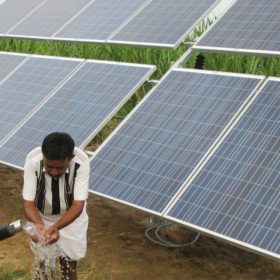
MIT researchers release evaluation of solar pumps for irrigation in India
Massachusetts Institute of Technology’s (MIT) study of solar pump technology used in India assesses technical performance and explores innovative business cases to increase user adoption. The study also helps farmers to choose the right size of the pump according to their requirement or size of fields.

imec, Panasonic develop highly conductive solid nanocomposite electrolyte
The Belgian research institute and the Japanese electronics group say they have developed a solid nanocomposite electrolyte with a lithium ion conductivity several times greater than in its liquid equivalent.

L&T Infotech and GE Digital as IIC members will deploy the Digital Testbed at solar plant in Rajasthan, India
The Digital Solar Plant Testbed evaluates solutions to accurately predict energy generation, improve utilization and reduce maintenance costs. IIC has estimated that 30% reduction in O&M expenses with the help of accurate forecasting will save around $15 million/year for utilities managers.
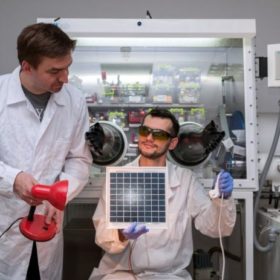
Scientists grind out solvent free perovskite thin-film process
Researchers from the Institute of Physics of the Polish Academy of Sciences (PAS) and the renowned Ecole Polytechnique Federale de Lausanne (EPFL) have collaborated on a new technique for the creation of perovskite solar cell materials. The technique replaces traditional solvent based processes with steel ball mill grinding.

“Smart” greenhouses can grow plants while generating electricity
A new type of greenhouse with special PV modules installed, which absorbs some light, while allowing some to pass through to allow photosynthesis has been tested by researchers at the university of California with very positive results.
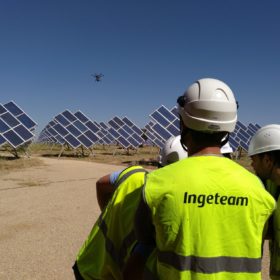
Ingeteam turns to the skies for PV power plant optimization
Spanish inverter supplier Ingeteam is taking part in a research program deploying drones to inspect existing PV power plants, to spot the causes of underperformance. The SCARAB project is headed by the company and has been provided with almost €650,000 (AU$980,000) in funding from the Spanish government.
