
Agratas advances 20 GWh battery plant in western India
Agratas, the global battery business of the Tata Group, has completed the steel frame of its Sanand facility in India, with production expected to begin in 2027.

Bauer Solar launches 480 W back-contact solar module
The German manufacturer said its new back-contact solar panel has a power conversion efficiency of up to 23.52%.

New intrusion detection systems boost protection of SCADA systems against cyber threats
An international reserch team developed two deep learning-based IDS models to enhance cybersecurity in SCADA systems. The hybrid approach reportedly improves detection of complex and novel cyber threats with high accuracy, adaptability, and efficiency, outperforming traditional methods across multiple datasets.
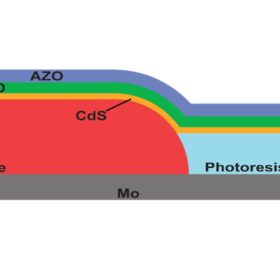
Copper, indium, selenium micro-islands pave the way for next-gen micro-concentrator solar cells
A German research team has developed CuInSe₂ micro-concentrator solar cells using laser-assisted metal-organic chemical vapor deposition to grow indium islands directly on molybdenum-coated glass, forming absorber arrays without masks or patterning. The not-yet-optimized micro-modules achieved up to 0.65% efficiency under one sun, with gains of up to 250% under concentrated illumination.

Spin-flip emitters could control energy pathways in singlet fission solar cells
Japanese researchers developed a molybdenum-based spin-flip emitter that efficiently harvests triplet excitons from singlet-fission tetracene dimers, producing strong near-infrared emission. This approach could boost solar cell efficiency and enable new quantum technologies by converting otherwise “dark” excitons into usable light.

Swiss startup offers lifetime guarantee for second-life batteries
Switzerland startup Evolium Technologies’ subscription-based business model offers residential battery owners a lifetime guarantee on second life batteries. The startup tests and remotely monitors each battery cell so it can alert customers when a cell is under-performing.
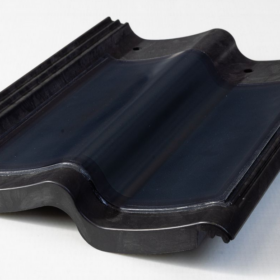
TNO unveils 12.4%-efficient perovksite solar tile
The Dutch research institute has presented what it describes as the world’s first perovskite-based roof tile, achieving up to 13.8% efficiency on standalone modules and 12.4% when installed on a curved surface. The flexible modules were produced using TNO’s experimental roll-to-roll platform,

Chinese researchers report 700 Wh/kg lithium-metal battery
A team from Nankai University and the Shanghai Institute of Space Power-Sources has developed a hydrofluorocarbon electrolyte enabling lithium-metal cells to operate at temperatures as low as -70 C.
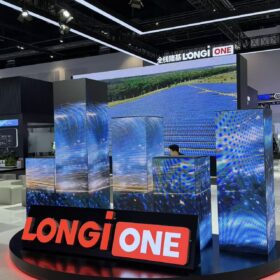
Longi launches integrated solar-plus-storage platform strategy
China-based solar manufacturer Longi is shifting from a multi-vendor system design to a unified solar-plus-storage architecture built around in-house technologies.
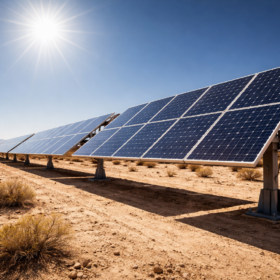
UNSW study finds tracker-based PV systems experience higher UV degradation than fixed-tilt arrays
New research from the University of New South Wales shows that PV module degradation varies widely with system design and location, driven by UV exposure, temperature, humidity, and atmospheric conditions. Tropical and desert regions face the highest stress, highlighting the need for climate-specific testing and system design.
