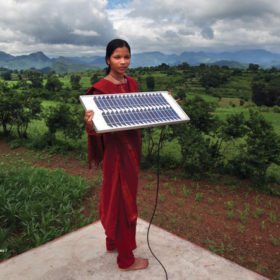
Penn State researchers develop low-cost solar cell
A research team at Penn State University has developed solar cells of up to 17% efficiency using a simplified concept requiring only one semiconductor material. Thanks to their potential for low-cost production, the researchers theorize that the cells could be used to provide power to energy poor communities the world over.

ANU researchers develop light management technique inspired by butterfly wings
Researchers at Australia National University have developed a nanostructure technique to finely control the direction of light. The technique, says ANU, could be applied to tandem perovskite/silicon solar cells.
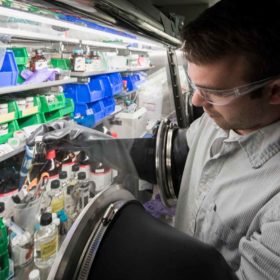
NREL develops controllable quantum dot systems
Researchers at the United States National Renewable Energy Laboratory (NREL) have developed a new designer quantum dot system, which allows for greater control over optoelectronic properties of the materials.

GCL-Poly’s polysilicon sales fall 43% in Q1
The Chinese energy group’s external sales of polysilicon fell about 43.4% year on year to 1,896 metric tons (MT) in the January-March period.
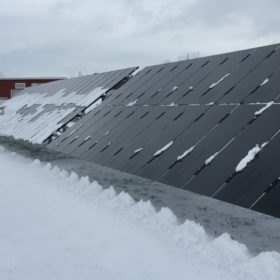
U.S.-Turkish research team uses data science to predict PET back-sheets degradation in solar modules
The scientists have used engineering epidemiology and statistical-data analytics to predict how polyethylene terephthalate films in solar panels deteriorate under multi-factor accelerated weathering exposures.
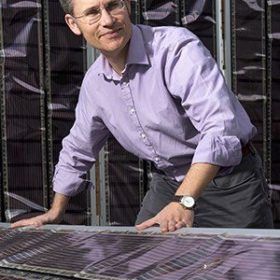
Uni Newcastle team tests “printed solar” panels in Australian first
Just days after Tesla announced it was taking orders – and down-payments – for its much-hyped and quite good looking solar roof, an Australian made printed solar innovation that could rival Elon Musk’s power generating tiles has moved one major step closer to commercialisation.
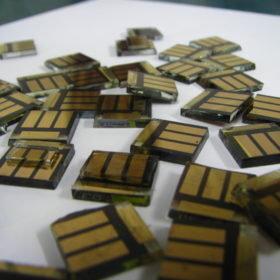
Atomic scale design could pave the way to more persistent solar cells, study says
Researchers from ICL claim to have discovered the cause for the rapid decrease in performance of perovskites. Adding iodide ions may help improve the stability of solar cells.
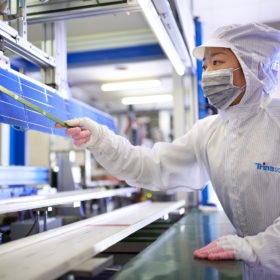
Trina hits 24.13% total-area efficiency for IBC mono cell
The new record is just 0.24% below the Chinese company’s small-area laboratory cell record and has been achieved on an industrial, large area cell.

University of Twente publishes research on back reflector materials
Researchers at the Netherlands’ University of Twente have developed a material comprising thin, diamond-like photonic nanostructures which reflect a surprisingly wide range of colours of light, from all angles. This could make the material ideally suited for use as a back reflector for PV modules.
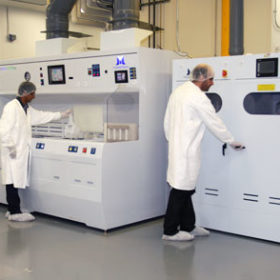
Natcore achieves 20.7% efficiency on silver-free back contact cell
The latest efficiency milestone for Natcore’s Foil Cell is verified by the NanoPower Research Lab at Rochester Institute for Technology. The result was achieved on the Natcore Foil Cell, which utilizes a lasering process and novel metallization strategy, eliminating the need for costly silver.
