
Bringing back-contact to the foreground
Solar manufacturers are pursuing the next-generation crystalline silicon (c-Si) PV cell technology. Back-contact (xBC) technologies including TOPCon back-contact (TBC), HJT back-contact (HBC), and HJT TOPCon back-contact (HTBC) have emerged as leading candidates, attracting attention for their superior conversion efficiency and aesthetic module designs. InfoLink analysts Derek Zhao and Kyle Lin examine xBC’s market potential.
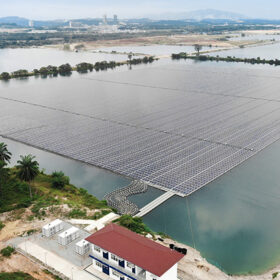
Primed for expansion in Malaysia
State support is nothing new for solar in Malaysia, but following years of steady growth, things are ramping up. Following a big tender announcement and a slew of new support mechanisms, industry leaders and market analysts tell pv magazine how blending private sector investment with government backing can bring Malaysian PV to the next level.

Matching ambition with implementation
Portugal’s renewables sector is maturing fast. Curtailment is increasing, flexibility is scarce, and grid-connection queues are crowded. For many asset owners, the obvious answer – retrofitting with storage or wind – has long been obstructed by red tape. Recent legal updates are starting to change this situation and unblock Portugal’s slow permitting regime.

Land ahoy
As a lawyer arranging land leases in the renewable energy sector, Mattan Lass noticed his clients had a very hard time acquiring land to develop solar on. The problem isn’t so much a lack of land availability, but the difficulty navigating land registries in various countries. Lass founded his company Solsign to tackle what he describes as “the disconnect between solar developers and the land.”

Let it burn
Battery fires, while a rare occurrence given the number of lithium-ion batteries manufactured and deployed each year, are common enough to worry insurers and others in the industry. Following high-profile battery fires in 2024 and 2025, the industry is busy implementing solutions not only to reduce the risk of fire breaking out in the first place, but to contain and mitigate the risk of injury or damage should it happen. Conclusions from large-scale fire testing will be key.
pv magazine Awards: Modules
PV module technology stands at a crossroads in 2025, as reflected in highlights from the pv magazine Awards entries received so far. Tunnel oxide passivated contact (TOPCon) cells have rapidly taken over the mainstream, but manufacturers are already lining up their next move to higher performance, with back-contact and heterojunction products coming to the market in increasing numbers.
At the same time, the crowded marketplace has suppliers searching for niches to fill, and modules designed for specific applications, such as repowering or vertical installations, are becoming more common. Award winners will be chosen by a panel of expert jurors and announced in December 2025. Until then, we’ll be highlighting some of the top entries received across all seven categories. This month, it’s modules that take their turn in the spotlight.

Non-stop solar innovation
It’s no secret that prices throughout the solar supply chain have been at rock bottom over the past 18 months. Alex Barrows and Molly Morgan of CRU Group explore how the market reached the imbalance that caused PV prices to crash, what this has meant for innovation, and how it might affect future technology transitions.

Pain in the glass
Solar modules are getting bigger, thinner, and more powerful. But from Texas to Thailand, the same problem is appearing: broken glass. These breakages are not caused by hail, dropped tools or obvious mishandling. Instead, cracks spider out from frame edges, splinter near clamps and web across modules. In cases seen by Jörg Althaus, director of engineering and quality assurance services at Clean Energy Associates (CEA), it starts with a few panels – then dozens, hundreds, even thousands.
pv magazine test: April 2025 results
George Touloupas, vice president of ESG and new services at Clean Energy Associates (CEA), and Huatian Xu, CEA’s director of technology and quality, analyze the April 2025 results from the pv magazine test outdoor installation in Yinchuan, China.

Recovery discovery
Can you give some background on recent industry concerns around ultraviolet-induced degradation in PV modules? For around two and a half years, we have been involved in several projects where larger module buyers benchmark different module types against each other in terms of reliability. In this context, we realized that there was strong UV degradation […]
