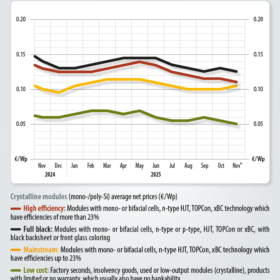
Beware of solar scammers
Potential PV system operators recently exchanged notes on an online forum after falling victim to solar scams. Sadly, they had been lured by fraudulent installation companies promising cheap offers and fantastic returns for end customers and investors. Martin Schachinger of pvXchange warns of the growing presence of fraudsters in Europe’s PV industry.
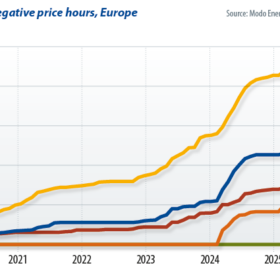
When solar is a zero-sum game
Negative prices are becoming more frequent in key European markets due to solar and wind intermittency, seasonal variations influencing demand and generation profiles, dated grid infrastructure, and market design. Battery storage absorbs excess generation, and tariffs shift consumption during peak demand, but too much market intervention can do more harm than good.
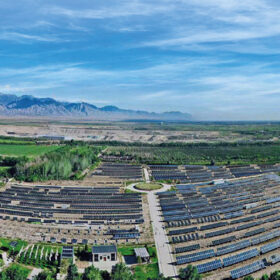
pv magazine test: October 2025 results
George Touloupas, vice president of ESG and new services at Intertek CEA, and Huatian Xu, the company’s director of technology and quality, present the October 2025 results from the pv magazine test outdoor installations in Yinchuan, China, and Dammam, Saudi Arabia.
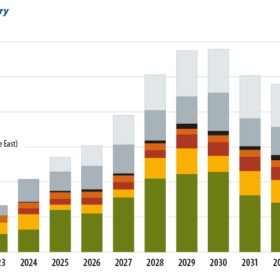
Solar soars in the Middle East
The rapid expansion of solar and battery installations in the Middle East over the past two to three years has taken many by surprise. A region synonymous with rich oil and gas reserves and periodically marked by regional tensions seemed an unlikely source of demand growth, but several factors have helped catalyze a transition that is still unfolding.

BESS: A hotbed of innovation
Jurors had a tough task selecting a battery energy storage system (BESS) award winner in 2025, with more than 60 entrants vying for the prize. Some entrants debuted entirely new approaches to energy storage, while others demonstrated continuous performance optimization, including round-trip efficiency gains, capacity utilization and degradation. This year’s winner takes an innovative approach to the C&I segment, with a modular system that breathes new life into second-hand batteries.
The business case for C&I storage
In 2024, European businesses installed roughly 20 GW of commercial and industrial (C&I) solar, but only around 1 GW/2 GWh of C&I battery storage. The gap is striking. Both technologies promise lower energy bills, improved resilience, and decarbonization, but batteries are yet to achieve the same commercial traction that solar enjoys. LCP Delta’s Dina Darshini asks why the gap persists.

BoS: Boosting bottom lines
Balance-of-system (BoS) products can have a major impact on solar plant safety and performance. The right equipment and components can increase reliability and reduce operations and maintenance (O&M) costs, and as this year’s winner shows, BoS innovation can have a major impact on project economics.

Forecasting big things
The output of a solar power plant is as unpredictable as the weather. Utilities and other stakeholders require forecasting on timeframes of between three days and 30 minutes ahead to optimize operations and ensure grid reliability. Reuniwatt’s Hannah Bergler reveals the complexity of providing forecasts at a PV mega project in the United Arab Emirates.

Solar anywhere
From the quiet plains of Alsace to some of the planet’s harshest frontiers, French company Ecosun Innovations is shipping out plug-and-play solar containers to bring instant, reliable power to off-grid sites. What began as a solution for construction crews and humanitarian missions is now attracting the attention of a new, fast-growing customer: the world’s armed forces, hungry for energy independence and low-carbon field operations.
Consolidation mode
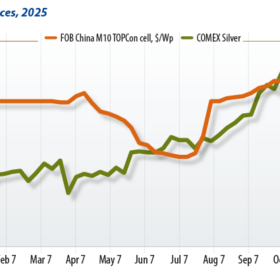
Policy developments, or the lack thereof, continue to shape market sentiment along the solar supply chain. Hanwei Wu of OPIS sees growing likelihood that China will implement a rumored plan to purchase and shut down excess polysilicon capacity, but slow progress keeps prices in a holding pattern.
