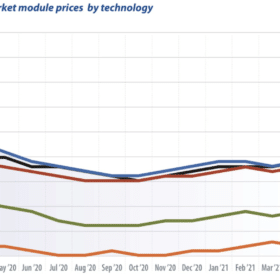
EU spot market module prices: Is sustainable market development possible?
Module manufacturers have once again adjusted their prices upwards. This is already the third or fourth price increase in the last six months, and there is no end in sight, writes Martin Schachinger of pvXchange. But why is it so hard to achieve long-term, sustainable development in the global solar market, at least on the part of manufacturers? Few other industries are so turbulent, with constant swings between excess supply and bottlenecks, between price collapses and price rises – and always to the breaking point of the market. Yet again, planning security is out the window.
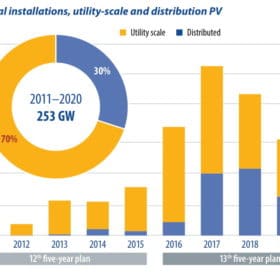
China reaches a tipping point in 2021
This year will be a key period in the development of China’s solar PV market. It is the first year of the 14th five-year plan, the first calendar year after President Xi Jinping announced the 2030-60 carbon emissions commitment, and the first year for utility and commercial unsubsidized projects. IHS Markit expects the solar industry in China to reach another milestone with more than 60 GW of installations this year, advancing the ground for the energy transition and the displacement of traditional energy sources to fulfill the goal of a net carbon future over the next four decades to come.
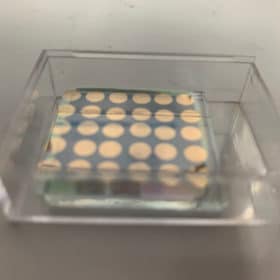
Future of cadmium telluride PV tech
In the third interview of a series, pv magazine spoke to Prof. Arvind Shah of École polytechnique fédérale de Lausanne and Associate Prof. Alessandro Romeo from the University of Verona about the challenges and opportunities of cadmium telluride (CdTe) PV tech. They said there is still potential to ramp up efficiency and cut costs, and claimed that the toxicity of cadmium should not be seen as a serious concern.

Micro III-V solar cell with 33.8% efficiency
Developed by a French-Canadian research group, the triple-junction cell is based on indium gallium phosphide (InGaP), indium gallium arsenide (InGaAs) and germanium (Ge) and has an active area of only 0.089 mm2. It can be used for applications in micro-concentrator photovoltaics (CPV).
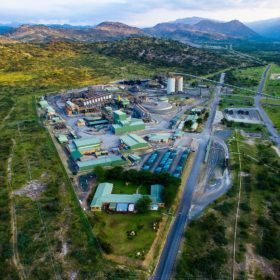
Green hydrogen supply chain concerns
With South Africa holding 63,000 of the world’s estimated 69,000 metric tons of platinum reserves – according to the Statista.com website – and Russia and Zimbabwe a further 5,100 between them, the European Commission has cited the metal as an example of a potential supply chain bottleneck that could handicap its grand plans for renewables-powered hydrogen production.

Exploring defects in a solid-state electrolyte
Scientists in the U.S. used sophisticated imaging techniques to observe previously unknown defects in the crystalline structure of a solid-state electrolyte. The scientists theorize that these defects could play an important role in the electrolyte’s performance, and that designing them more carefully into the material could have impressive results.

SolarPower Summit 2021 live blog
pv magazine will be hanging out with the great and the good of the European solar scene this week, during the three-day SolarPower Summit 2021 organized by industry body SolarPower Europe, which began on Monday. Keep an eye on this live blog for regular updates from our virtual correspondents.
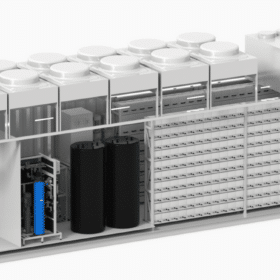
Enapter develops MW-sized AEM electrolyzer
The new electrolyser with anion exchange membrane technology is expected to produce 450 kilograms per day and will be available on the market in 2022.
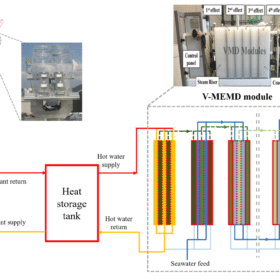
Rooftop CPV-thermal tech to produce electricity and freshwater
It’s claimed the decentralized desalination system can deliver a levelized cost for desalinated water of US$0.7-4.3/m3, depending on PV costs and electricity prices. It was built with several concentrated photovoltaic/thermal (CPV-T) collectors, a hot water tank, a V-MEMD module, a seawater feed tank, and a distillate tank.
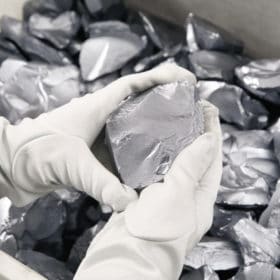
Tongwei became the largest polysilicon producer in 2020
A new report from Bernreuter Research reveals that Wacker Chemie lost its top spot in the 2020 global polysilicon rankings. It was also the only western company among the “Big Six” that are expected to form a new polysilicon super league in the PV industry. Overall, these six reached a total polysilicon capacity of 470,000 MT last year.
