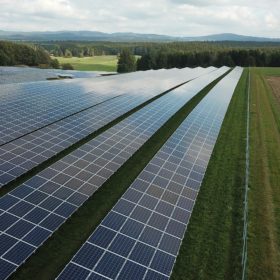
LCOE from large scale PV fell 4% to $50 per megawatt-hour in six months
Analysts at Bloomberg New Energy Finance say the lowest-cost projects financed in Australia, China, Chile and the UAE in the last six months hit a levelized cost of energy of just $23-29/MWh and the best solar and wind projects will produce electricity for less than $20/MWh by 2030.

Solar, wind and hydro resilient during Covid-19 crisis
A study by the International Energy Agency into the chilling effect of the Covid-19 pandemic on energy demand states renewables will be ‘the only energy source likely to experience demand growth for the rest of 2020’. The slower the economic recovery, the more the fossil fuel industry will suffer.

Mini perovskite module with 18.13% efficiency
Scientists from Singapore have developed semi-transparent perovskite solar cells that can be easily integrated into a range of urban contexts, including building facades, gates and windows. The 21cm2 mini panels are made of perovskite solar cells based on methylammonium lead iodine (MAPbI3), with an efficiency of 20.28% for 0.16 cm2.
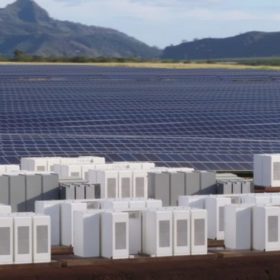
Despite solar woes, Tesla recorded its first profitable Q1
Tesla finished the first quarter of 2020 with a positive GAAP net income, driven by the profitability of the Model Y. However, the story was not so bright for solar, storage or corporate governance.
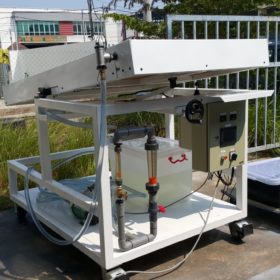
Cost-effectiveness of PV module cooling techniques
Researchers in Malaysia have proposed a new method to determine the best way to design PV cooling systems. They will rank cooling technologies by manufacturing costs and expected panel output.
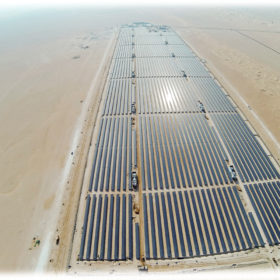
The 900 MW fifth phase of 5 GW solar park moves forward in Dubai
The $570 million fifth phase of the project will sell power at $0.016953/kWh under a 25-year power purchase agreement. It is scheduled to go online in the second quarter of 2021.
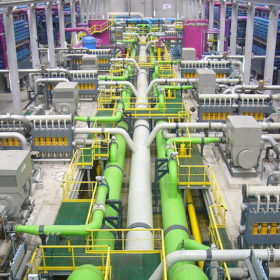
Solar can drive down levelized cost of desalinated water
A study from Finland’s Lappeenranta University of Technology states decarbonization of desalination could help achieve a levelized cost of water of €0.32-1.66 per cubic meter. Solar and storage are expected to play a decisive role.

Covid-19 weekly briefing: Merchant solar developers could seek shelter in return to subsidies and PPAs are being revisited, but at least the Irish are coping with lockdown measures
The unfolding effects of the Covid-19 crisis, and fears of a possible second wave, have split analysts trying to guess how the unsubsidized renewables market will emerge as slumping demand continued to distort power markets. pv magazine rounds up the week’s coronavirus developments.
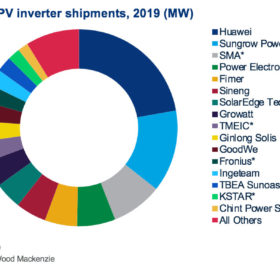
Huawei, Sungrow and SMA dominate global inverter market
Analysis from Wood Mackenzie shows global inverter demand grew 18% last year. The ten largest inverter suppliers accounted for 76% of the global trade.
Covid-19 disruption leaves indebted Chinese manufacturer in limbo
Debt-saddled GCL-Poly’s attempts to renegotiate $809 million of defaulted borrowings have been held up because of the coronavirus crisis unfolding in Europe, where one lender is based. Shareholders are due to vote tomorrow on a project sale which could generate $153 million of benefits.
