Germany and France modify solar tenders because of Covid-19
The governments of both countries are answering solar industry requests by adjusting tender schemes and considering measures to avoid financial penalties and the loss of incentives due to missed deadlines.
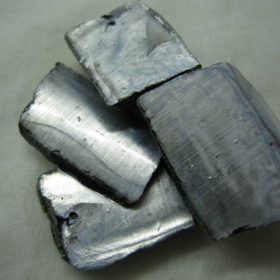
A stable potassium-ion storage with new cathode material
Scientists in China claim to have identified a special cathode material that could be utilized in more stable potassium-ion storage systems. According to the group, this new material could enable the development of storage systems able to retain 94% of their capacity after 2000 cycles, with 0.003% capacity fade per cycle.

Covid-19: IHS Markit expects demand for private and commercial storage to fall significantly
A slump in demand would weigh more heavily on the storage industry than a temporary production shutdown and IHS Markit analysts say that is where the risk lies, rather than with a temporary shortage of battery cells. A similar prediction has been made for the PV market.
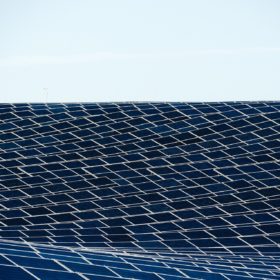
A dual-angle approach to building solar plants at higher latitudes
A research team in the US has proposed a ‘dual-angle solar harvesting’ method it is claimed could help PV developers optimize energy yield and land use. It is claimed the method would be particularly suitable for projects in cloudier climates and at higher latitudes.

New York allocates 1 GW of solar as renewables auction delivers $18.59/MWh average price
The results of New York Statevs most recent renewable energy request for proposals are in. Some 21 large scale clean energy projects with 1,278 MW of new capacity have been awarded, with 17 of the projects supplying 1,090 MW of solar.

Estonian renewables auction attracts 17 bidders
The winners in the Baltic nation’s first clean energy auction will be announced by June 20. With the exercise rated according to the expected output of the facilities allocated, the government has committed to procure 5 GW worth of facilities, from a total 16.3 GW offered by bidders.
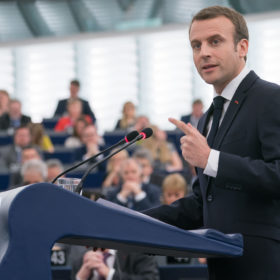
How Covid-19 is affecting the French solar sector
Franc Raffalli, president of the Photovoltaic Professions Group of the French Building Federation spoke to pv magazine about the impact of the coronavirus on the French PV industry.

Finance secured for 500 MW Omani project despite Covid-19 disruption
Saudi energy company Acwa Power announces $275 million has been borrowed for a project which is due to start supplying electricity to the national utility this year under a 15-year power supply deal.
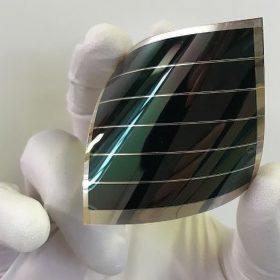
An organic solar cell with 25% efficiency
The ‘best conversion performance in the world in a dark room’ is how the developers of a new organic PV device have described it. Such cells could be used as a wireless source of energy for internet of things applications or in gadgets such as temperature-humidity and motion sensors.
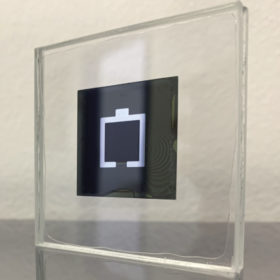
Perovskite technology – beyond efficiency records
Technological innovation in PV is taking place in the context of extreme price competition among solar manufacturers, writes Karl Melkonyan, senior analyst for solar demand at IHS Markit. This, he argues, explains the focus on lowering manufacturing costs, increasing efficiencies, and reducing losses at all stages of the manufacturing process.
