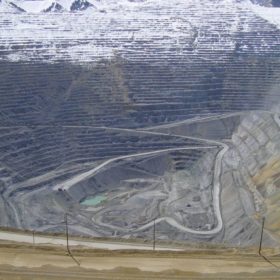
US State Dept issues strategy to diversify clean energy, storage supply chains
The Trump administration is acknowledging global demand for clean energy and energy storage with the US State Department’s new strategy.
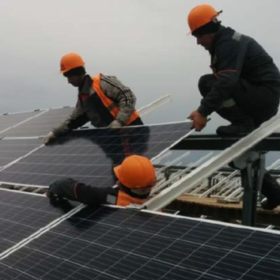
Hevel starts building 100 MW in Kazakhstan, expands pipeline to 178 MW
Hevel Group has started building 100 MW of solar in northern Kazakhstan. The project, which the Russian PV group claims will be one of the largest solar plants in the Commonwealth of Independent States, is part of its 178 MW pipeline in the Central Asian country.
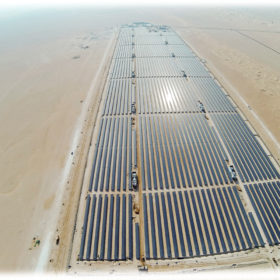
DEWA issues tender for fifth 900 MW phase of 5 GW solar park
Overall, 64 companies have expressed interest in building the next 900 MW phase of the huge Mohammed bin Rashid Al Maktoum Solar Park. The first section of this part of the park is scheduled for completion in the second quarter of 2021.
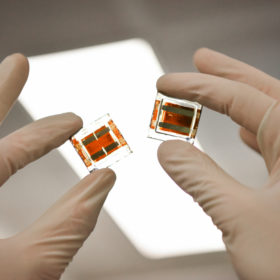
Copper iodide, another option to stabilize perovskite cells
A research team from Russia’s institutes NUST MISIS and IPCE RAS, and Italy’s University of Rome Tor Vergata, have applied an additional layer of p-type copper iodide semiconductor between perovskite and the hole-transport NiO layer of the cell. According to the scientists, this inorganic material is more accessible and easy-to-use.
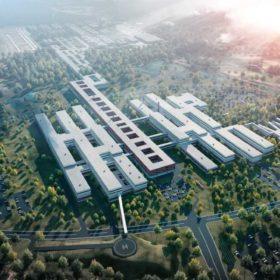
MW-sized solar park for 100% self-consumption in Denmark
A 4.8 MW solar park, which is being built by Danish developer Better Energy, will cover 20% of total power demand of a new hospital complex in Odense. The energy produced by the plant will be 100% self-consumed.
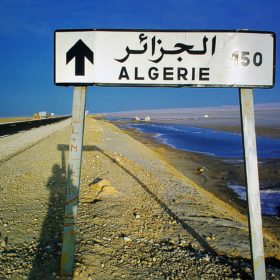
Limited success for Algeria’s 150 MW PV tender
Only eight of the 93 companies which acquired the technical specifications for the tender have decided to participate in the procurement exercise. Collectively, the submitted project proposals had a combined capacity of 90 MW. Domestic content rules required the use of solar modules assembled in Algeria, as well as locally manufactured mounting structures and cables.
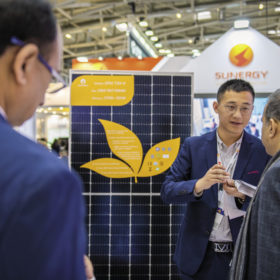
Sharp cell, module distinctions begin to form
The cost effectiveness of solar energy is becoming a top priority in terms of the selection of end market products, writes EnergyTrend’s Lions Shih. The result? A more varied and diverse module landscape alongside mono’s continued rise.
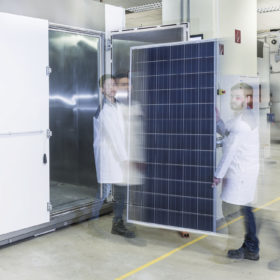
The weekend read: Is PERC still bankable?
Light-induced initial degradation in PERC modules is currently a subject of intense discussion, but tests at PI Berlin have shown that the problem is solvable. Founder and CEO Paul Grunow explains the effects, the approach, and the results.
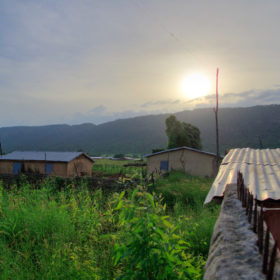
Benin approves four PV projects totaling 50 MW
Four projects, planned to be located across several regions, will be developed through private-public partnerships and a development program supported by the United States.
Engie commissions 100 MW solar park in Belgium
Construction on the Lommel project started in October. The facility, owned by Flemish investment company Limburgse investeringsmaatschappij, will sell power to a zinc manufacturer and is also entitled to a premium of €0.0479 on top of the market power price.
