
German industry body calls for 5 GW cell manufacturing fab in Europe
The VDMA says Europe can restart a solar production sector that can compete on price with Chinese imports by reducing transport costs – provided a Euro supply chain can be established.

‘New and strange properties’ provide a boost to energy storage
MIT scientists have developed a class of liquid electrolyte with properties they say could open up new possibilities for improving the performance and stability of lithium batteries and supercapacitors.
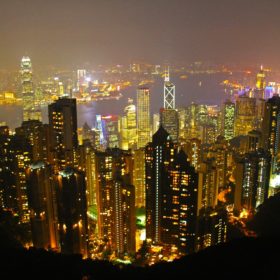
Ganfeng Lithium’s Hong Kong-based shareholders rebel
Holders of almost two-thirds of the miner’s Hong Kong listed stock voted down a proposal to issue new non-Chinese shares that would dilute their investment by around a quarter. The board had proposed the move to raise funds for further lithium extraction overseas.

Cameroon to improve power supply with 25 MW solar projects
Energy of Cameroon wants to build two solar parks to improve power supply in the country’s northern regions. The projects will be developed by a consortium led by Norwegian solar company Scatec.

Botswana kicks off 100 MW solar tender
Botswana Power Corp is seeking independent power producers to build two 50 MW solar parks. The projects are intended to reduce the nation’s dependence on power imports from troubled South African utility Eskom.
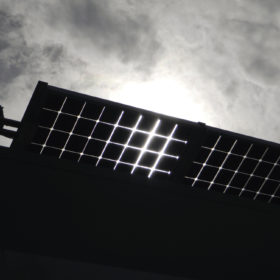
Webinar Q&A: Simulating the gains of bifacial and tracking installations, where’s the rub?
Following up on the webinar held with Trina Solar about the new algorithms needed for bifacial and tracking installations, the word is that gains of 20-30% are not unlikely. To attain that, however, the sweet spot of front and rear side yield has to be reached. Trina has showcased a new algorithm alongside its bifacial n-type modules and claims it can do just that.
Asian battery manufacturers eye European riches on offer
A report produced by an AI and automation market research company says an anticipated boom in the European storage market – driven by a desire to reduce carbon emissions – will attract producers as demand outside China tails away.

China holds key to corporate solar take-up but lags way behind Texas at present
The Lone Star State accounted for almost half of the activity witnessed in the world’s biggest corporate clean energy marketplace but analysts are excited about the prospect of Beijing mandating companies to purchase minimum levels of green electricity.
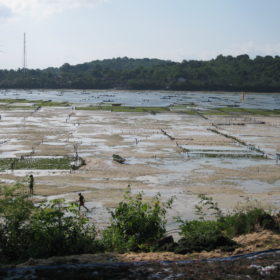
Aquavoltaics in the Philippines
An EU funded solar-plus-storage project has been tendered in the Philippines. The United Nations is seeking bids for the system, to support the seaweed industry on the island of Tawi-Tawi. Combining PV with aquaculture brings many advantages for both, including water conservation, a more controlled aquatic environment, and ecosystem restoration.
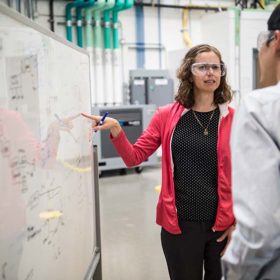
Stitching together the grid of the future
A vision of a decentralized, renewable-powered electricity grid is being brought a step closer by scientists at the U.S. National Renewable Energy Laboratory. Their project, Autonomous Energy Grids, aims to take an overarching look at the solutions that will power this grid of the future, and to fill any gaps that appear between them.
