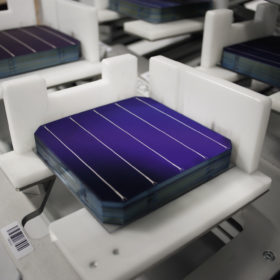
Energytrend: Stockpiles down, utilization and prices recovering
The Taiwanese market research company has published its latest price trend data for PV modules, cells, wafers and silicon. Across the value chain, rising demand is causing stockpiles to dwindle and utilization rates to rise. Prices are rising in China as well as for high-efficiency products. Module prices have stabilized.

China installed 43.6 GW of solar last year – despite 5/31 New Policy
Central subsidies may have been cut back but the domestic market rebounded quickly and overseas shipments soared on the back of rising production volumes and ever cheaper module prices.
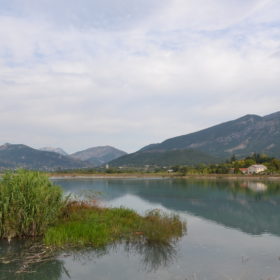
EDF develops its first floating PV project – which will be France’s largest
The 20 MW solar project will be located on the hydroelectric reservoir at Lazer in the Hautes-Alpes, next to the Saint-Sauveur dam.

Dutch pension fund and Shell eye acquisition of energy company Eneco
PGGM and Shell have expressed interest in acquiring sustainable energy company Eneco, a municipality owned business which wants to go private. The energy provider has installed 100 MW of PV and operates in northwest Europe.
Kaco sells central inverter business to Korean developer OCI Power
German concern Kaco has sold its central inverter business. The German manufacturer hopes to focus on its string inverter and energy storage branches while the South Korean buyer hopes the newly acquired knowhow can improve the energy efficiency of its large-scale PV parks.
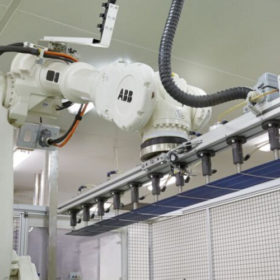
PERC cell efficiency records tumble
Chinese manufacturers Risen Energy and LONGi have both announced conversion efficiency records for PERC cells as the twin quest to drive down costs and increase energy output shows no sign of abating.
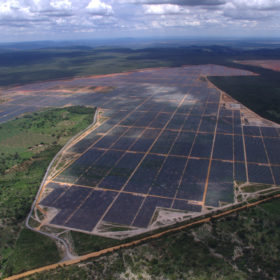
Enel sells Brazilian PV plants totaling 450 MW to China’s CGNEI
Two facilities were sold along with a 90 MW wind power plant generating the vendor around €700 million. Both solar projects were awarded 20-year PPAs in the most successful auction held by the Brazilian government, in August 2015.
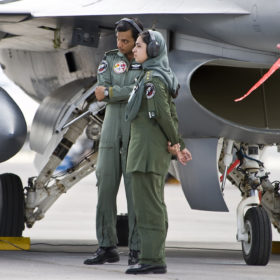
Pakistan regulator reviews 50 MW PV proposal, armed forces seek 26 MW
Pakistani regulator NEPRA is considering a tariff for a 49.5 MW site in the Khyber district. At the same time, the country’s armed forces are eyeing PV deployment for their operations.
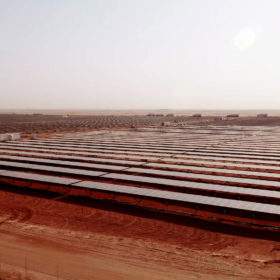
MENA PV additions quadrupled in 2018
As anticipated, 2018 was a pivotal year for PV installations in Middle East and North Africa, writes Josefin Berg, Research and Analysis Manager at IHS Markit. Our end-of-year estimates show that approximately 3.6 GW of PV systems were installed in the region in 2018, compared to less than 1 GW in 2017.
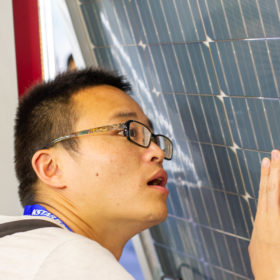
Green power certificates and curtailment will be key to China’s grid parity solar ambition
Analysts have welcomed the measures ushered in by Beijing to encourage the development of PV projects without central subsidies, but with the obstacles the policy aims to address having dogged Chinese solar for years, more detail is required.
