QWAY to develop 500 MW of renewables in Angola
Belgian developer QWAY energy has announced plans for 500 MW of renewable energy capacity in Angola, up to 300 MW of which it says will be solar PV. The company has signed a contract for the projects with Angola based company Thueia.

Electricity and hydrogen, from one cell
Scientists at the United States Department of Energy’s Lawrence Berkeley Laboratory have created a hybrid device which can produce both hydrogen via water splitting and electricity via photovoltaics.
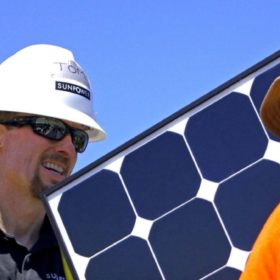
SunPower still swinging in Q3 results
The high efficiency PV maker is still chasing elusive profitability, but had some major successes this quarter and is optimistic about new technologies and opportunities.
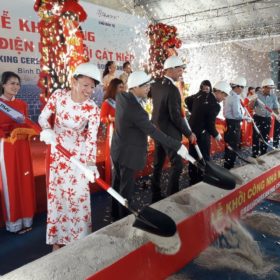
Juwi signs contract for third project in Vietnam
German renewables developer Juwi has signed a contract to provide EPC services for a 50 MW project located near to the coast in central Vietnam’s Binh Dinh province. This project brings Juwi’s pipeline in the Southeast Asian country to 130 MW.
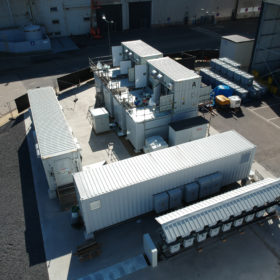
Europe’s largest commercial and industrial PV storage testbed launched
Testing lithium-ion, redox flow, and sodium-sulfur technologies, EPC provider CMI Energy wants to establish which types of system, or which combinations, are most suitable for different applications using the 4.2 MWh facility.
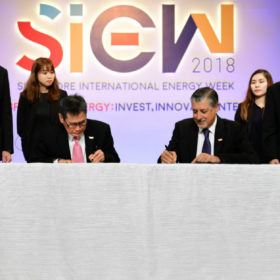
IRENA and southeast Asian nations pledge action on PV
The International Renewable Energy Agency wants to unlock the PV potential of the Asia-Pacific region with technical and planning support. It says a better flow of knowledge is needed to close the gap on a regional aim of generating 23% of energy from renewables by 2025.
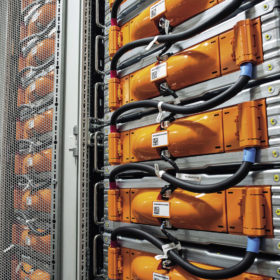
Special coverage of energy storage markets & technology, courtesy of pv magazine
pv magazine brings you a special edition devoted to the fast-growing energy storage space, including a look at its thornier challenges
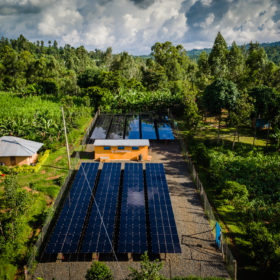
Risk of a ‘bridge to nowhere’ effect in Africa’s electrification
A report from the United States’ Rocky Mountain Institute finds more work is needed on the demand side for microgrids and other rural electrification projects in Africa. Such projects, says the report, often focus on building generation capacity, with little consideration for the ability of end users to make good use of energy.
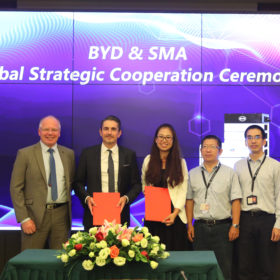
Inverter maker and battery giant charge into US market
German inverter maker SMA has joined forces with China’s BYD after losing US market share to Solaredge, which this year linked up with Kostal to optimize communication interfaces between inverters and storage applications.

Falling rupee could threaten $3.84bn of Indian solar projects
As the currency continued to fall today, analysts are concerned developers will see any savings from lower module prices disappear, and lenders may get nervy, putting India’s national solar target in grave doubt.
