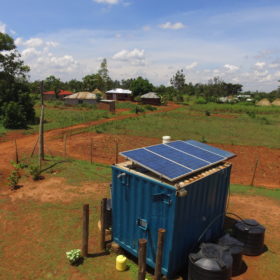
Renewables penetration unbalanced across sectors, off-grid solar boosts access to electricity – report
According to a tracking report from five international agencies, the world is lagging behind its sustainable development goals for the period 2015-2030, although significant progress has been made in reducing electrification deficit in the least developed countries, and industrial energy efficiency. Off-grid solar solutions, meanwhile, are emerging as one of the key drivers of rural energy access.

Iconic Mercedes-Benz star to disappear from residential battery market
The German car maker entered the solar PV home storage business in mid-2016. In the future, its parent company, Daimler will align the stationary storage segment with its grid business.
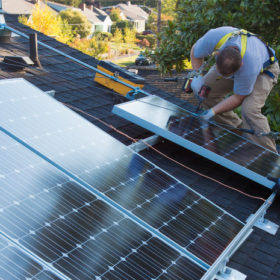
Four-junction tandem thin film cells have strong potential for residential applications, MIT scientists say
Four different thin film solar PV technologies were tested by the MIT experts across three types of environment in the U.S.: Arid (Arizona); temperate (South Dakota); and humid (Florida).
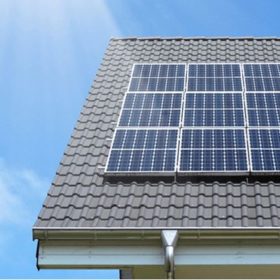
ReneSola sells stake in China DG solar business for $31.5 million
ReneSola Ltd has sold a 40.13% stake in its Zhejiang ReneSola Investment Limited subsidiary, which deals with its distributed generation (DG) solar PV projects in China.

Stanford scientists unveil new manganese-hydrogen battery for storage of wind, solar
The water-based battery relies on a reversible chemical reaction that stores electrons in the form of hydrogen gas. Despite encouraging first results, the prototype developed by the research team now needs to be further developed.
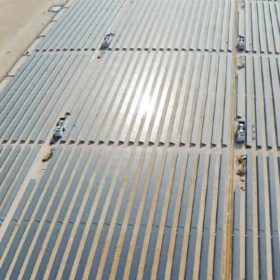
EDF brings 200 MW of PV online in Dubai
The PV plant is the first section of the third 800 MW phase of the 1 GW Rashid Al Maktoum Solar Park. The facility will sell power to the Dubai Electricity & Water Authority at US$0.00299 per kWh.
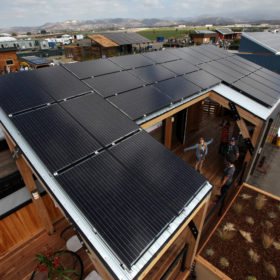
Ontario earmarks $70 million for solar, storage rebates
Under the GreenON’s Solar Rebates Program, homeowners will be able to install solar-plus-storage systems with a capacity of up to 10 kW, while businesses will be entitled to deploy up to 500 kW of rooftop PV capacity.

Tunisia preliminarily approves 10 solar projects selected in 70 MW tender
The solar PV parks, which will range in size from 1 MW to 10 MW, will sell power to the country’s state-owned utility, Société Tunisienne de l’électricité et du gaz (STEG) under a long-term PPA.
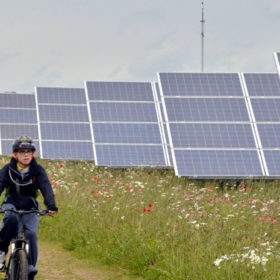
US community solar capacity more than doubles in 2017
387 MW of community solar projects were installed in the United States last year. This brings the cumulative total to 734 MW, with the majority in Minnesota and Massachusetts.

California blows through solar power, renewable energy output records
California has set a new record for peak output of utility-scale solar at more than 10.5 GW, as well as for renewable energy overall. However, the state’s grid operator is still curtailing solar and wind while hydro and the last nuclear plant run full-steam.
