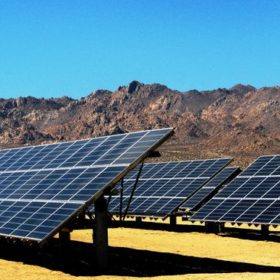
EDF to acquire 80% stake in 115 MW Brazilian solar farm
The French energy utility has snapped up a controlling share of the Pirapora II solar project from Chinese firm Canadian Solar. Plant is due to be commissioned in the first half of 2018.

Czech Republic expands options for rooftop PV under Green Savings Programme
The scheme, which provides investment support for residential and commercial PV systems, now includes the possibility of expanding projects developed under the program’s previous phases.

Spanish government confirms bidding rules for upcoming 3 GW auction
The decree implementing the auction was published in the country’s official journal on Saturday. Solar seems to have more options compared to the previous 3 GW auction, in which only 1.5 MW of PV was contracted.
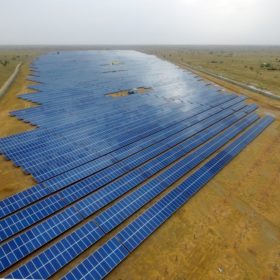
India: Anti-dumping case comes at crucial time for solar, says Mercom Capital Group
Government “highly unlikely” to disrupt soaring solar market by acquiescing to demands to introduce anti-dumping tariffs on solar modules and cells from China, Taiwan and Malaysia, says Mercom Capital, but others argue duties are only way to ensure survival of domestic industry.
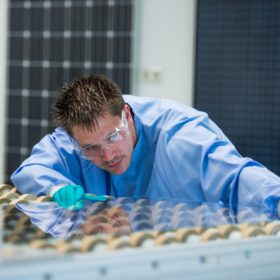
Netherlands’ DSM develops new sand-resistant solar glass
The Dutch specialty group believes its sand-resistant coating for solar panels will be particularly suitable for desert areas. The new technology is currently being tested at a solar plant in China’s Gobi Desert.

TTC to invest $1 billion on 1 GW in Vietnam — reports
Vietnamese conglomerate TTC Group is now seeking investors for 10 to 20 projects, with plans to connect them to the grid by next year, according to recent media reports.
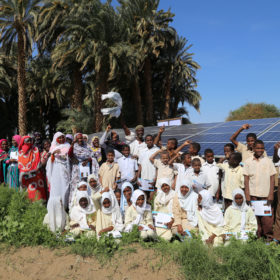
Sudan preps to launch FIT scheme for solar and renewables
The FIT program, which is being developed with the support of the UNDP, is expected to encourage grid-connected renewable energy projects as well as off-grid generation.
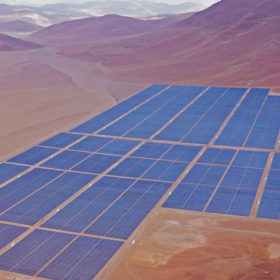
BNEF report outlines big expectations for key Latin America markets
In its New Energy Outlook 2017 report (NEO), published earlier this week, Bloomberg New Energy Finance (BNEF) outlines its expectations for energy in the Americas between now and 2040. The report predicts big for the key regional markets Brazil, Chile and Mexico.

India: TANGEDCO receives technical bids of 3.7 GW for 1.5 GW solar tender
As expected, TANGEDCO’s new tender has attracted unprecedented attention, despite the utility’s previous unpopularity among developers.

Mongolia gets $54.4 million to improve grid and build 10 MW solar plant
The two projects will be funded by the World Bank and the Scaling-Up Renewable Energy Program under the Strategic Climate Fund
