
Colombia issues legislation for self-consumption
The Colombian government has published the decree that regulates the installation of renewable energy and solar power systems for self-consumption. The new regulation, which applies to systems up to 100 kW, simplifies the procedures for grid-connection and sale of excess power.
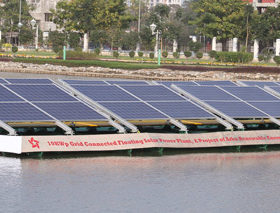
Sri Lanka moves on 100 MW floating PV
The South Asian nation’s government has approved the construction of a floating PV array on a 202-hectare reservoir in the Mahaweli Economic Zone.
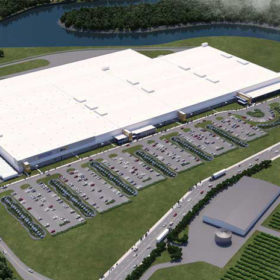
Tesla to finally close the door on Silevo
It’s been a long time coming, but Tesla’s annual report confirms that the SolarCity-Silevo romance has come to an end
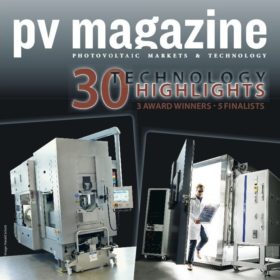
pv magazine Technology Highlights: Jury announcement
pv magazine is very pleased to announce the six-member jury that will meet to decide this year’s Technology Highlights feature and award. The award recognizes excellence in PV production materials and equipment supply.

Enel Green Power converts Italian module factory to production of bi-facial, heterojunction technology
Italy’s ENEL will invest €80 million ($84.4 million) to convert its PV module manufacturing facility, in southern Italy, from amorphous silicon to bi-facial heterojunction modules. ENEL expects to launch its new modules in 2018 and to reach a capacity of 240 MW in 2019.
Norwegian solar market sees the light with 366% growth in 2016
Around 11 MW of new PV capacity was installed last year in Norway. The volume of new installations grew by 366% compared to 2015. This growth was mainly driven by the country’s regulation for self-consumption and the green certificate scheme.

Neo Solar Power confirms it will gradually exit polycrystalline production
The Taiwanese solar cell maker has confirmed to pv magazine that it will exit the polycrystalline PV business and will focus on its monocrystalline products. The company intends to gradually lower its polycrystalline PV capacity.

UK installs over 1.94 GW of PV in 2016
The UK installed almost 2 GW of new PV installations in 2016, according to provisional BEIS statistics. The country’s cumulative capacity now surpasses 11.49 GW. The largest increase in capacity during the year was registered in March 2016, before the Renewable Obligation scheme for projects smaller than 5 MWp was closed, with a one-year grace period for some projects.
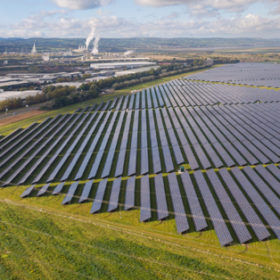
Foresight Solar Fund looks to raise more than GBP 50 million in new investments
The UK based investment group has announced its intention to raise further investments worth more than GBP 50 million (US$ 61.2 million), with the aim of acquiring up to 250 MW of solar power plants in the UK, as well as expanding into South Africa.
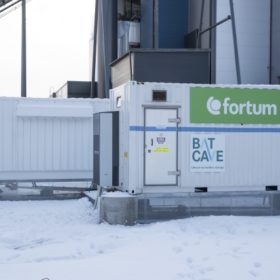
Fortum commissions the biggest battery in Finland
Saft has provided a 2 MW lithium-ion battery for a Fortum power plant in Järvenpää, Finland. Fortum will receive a 30% subsidy from Finland’s government towards the €1.6 m cost of the project.
