Australian developer begins work on 1.2 GW wind-solar hub
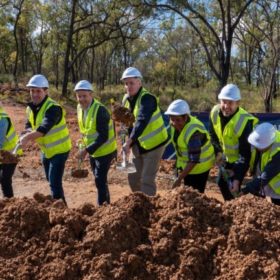
Squadron Energy has started building a 1.2 GW hybrid wind, solar and battery energy storage project in the Australian state of Queensland.
The Hydrogen Stream: Global electrolyzer market to reach 8.5 GW by 2026
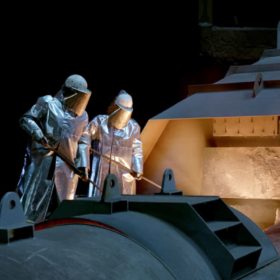
GlobalData has predicted that the global electrolyzer market will hit 8.52 GW by 2026. BP and Thyssenkrupp have agreed to cooperate on the use of hydrogen in the steel sector, while electrolyzer supplier Nel Hydrogen has secured orders in Australia and Denmark.
Quinbrook unveils plans for 2 GWh big battery in Australia
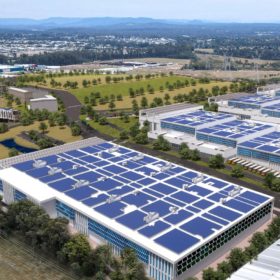
Australia’s Quinbrook Infrastructure has unveiled plans to build a AUD 2.5 billion (§1.7 billion) data storage precinct in Brisbane that will be powered by renewable energy. It will include one of the largest battery storage installations in the National Electricity Market.
Solar-powered direct air carbon capture tech from Australia
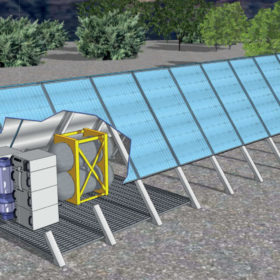
Australian company AspiraDAC, which uses solar-powered Direct Air Capture (DAC) technology to remove carbon from the atmosphere, has been selected to be part of the first round of purchases from Frontier, a program backed by Facebook and Google’s parent companies, Meta and Alphabet.
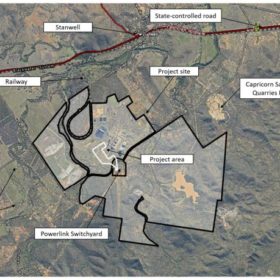
Australian coal power plant to host massive 1.45 GW/2.9 GWh battery
Queensland government-owned energy generator Stanwell has revealed plans to a build a massive 1.45 GW/2.9 GWh battery storage system alongside the coal-fired Stanwell Power Station in central Queensland as the state government looks to ramp up energy storage capacity to support the transition to renewables.
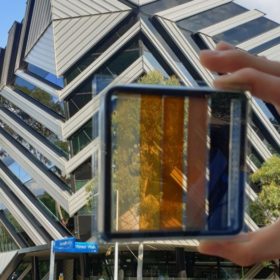
Semi-transparent perovskite solar cell for window applications
Buildings, particularly those with glass facades, are getting closer to self-powering, according to Australian scientists who recently developed a 15.5%-efficient, semi-transparent solar cell that allows more than 20% of visible light to pass through.
Perovskite-silicon tandem solar cell with TOPCon structure hits 27.6% efficiency
A research group led by Chinese manufacturer JinkoSolar has developed a tandem perovskite-silicon cell with a subcell based on TOPCon tech. The group succeeded in reducing voltage losses in the silicon sub-cell by minimizing the shunting probability during device fabrication.
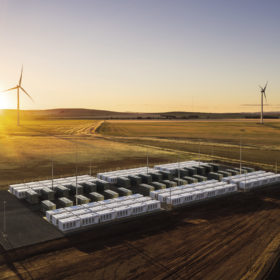
Tesla big battery operator fined for breaching Australian power rules
The operator of the 150 MW/193 MWh Hornsdale Power Reserve in South Australia has been fined AUD 900,000 ($620,470) for failing to provide essential services to maintain the stability of the grid.
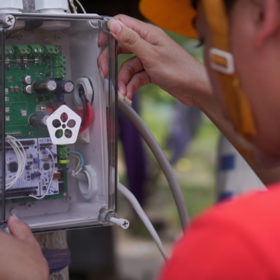
Okra Solar secures funding to bankroll mesh-grid expansion
Australian renewables startup Okra Solar has raised $3 million to scale up distribution of its solar-based hardware and software solutions. It aims to electrify more than 290,000 off-grid homes in Nigeria over the next three years, while also expanding its operations in countries such as Haiti.
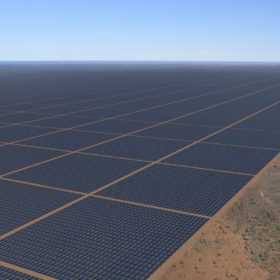
Sun Cable project secures support of Infrastructure Australia
Sun Cable’s massive AUD 30 billion ($20.7 billion) Australia-Asia PowerLink project has passed another major milestone by obtaining approval from Infrastructure Australia.
