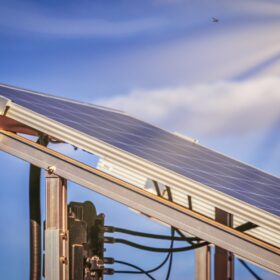
Optimal tilt angle for agrivoltaic projects in Mediterranean region
Scientists in Turkey determined the optimal tilt angle for agrivoltaic projects associated with different crops in the central Mediterranean region, and other regions with similar latitude and climatic conditions.
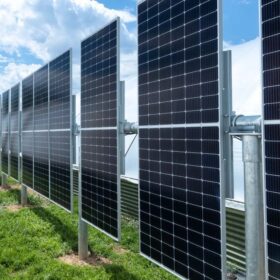
Solar fences stand out in Australian market simulation
Solar fences are starting to gain traction in European and North American markets, with figures from energy software specialist Gridcog suggesting that vertical bifacial solar could also be technically and economically viable in Australia.
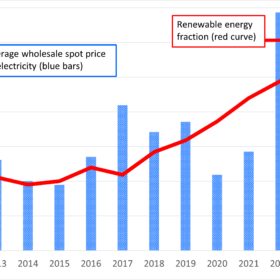
PV and prices – the fast uptake of solar in Australia
Australia currently has about 40% renewable electricity, mostly solar and wind. This is not causing wholesale spot prices to change, nor destabilizing the grid. On current policy settings, the country will reach 82% renewable electricity in 2030.
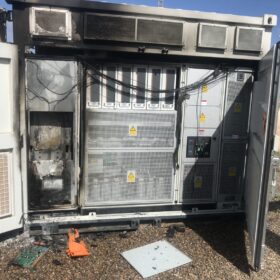
Worker injured in fire at South Australian solar farm
The Australian authorities launched an investigation after an inverter burst into flames at the 30 MW Mannum Stage 2 solar farm, which is being developed near the town of Mannum, South Australia. A worker is now being treated in the hospital for burns.
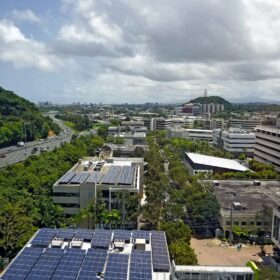
IEA warns of Australian rooftop PV slowdown amid high costs, grid issues
The International Energy Agency (IEA) says the rollout of rooftop solar in Australia will drop off “faster than anticipated,” with grid integration challenges and saturation of the power system contributing to a revision of expectations for renewable energy growth.

ClearVue scores commercial first with solar glass tech
Australia’s ClearVue Technologies has secured an order to provide its clear solar glass technology for a AUD 12 million ($8.0 million), six-floor building in Melbourne.
Australia’s rooftop PV additions hit 3.17 GW in 2023
A record 921 MW of PV was installed across Australian rooftops in the fourth quarter of 2023, taking new rooftop solar capacity to about 3.17 GW for all of last year.
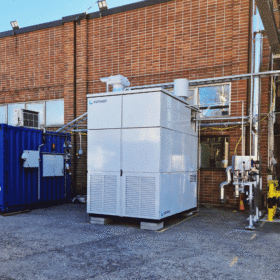
The Hydrogen Stream: Consortium unveils 85%-efficient solid oxide electrolyzer
Elcogen and Convion have revealed test results for their new solid oxide electrolyzer, with an electrical efficiency above 85%. It could potentially facilitate the production of 39 kWh of electrical energy per kilogram of green hydrogen.
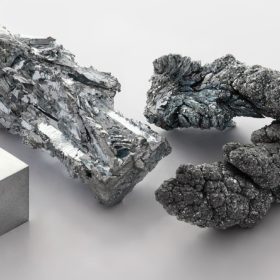
Australian researchers reveal ‘scalable’ aqueous rechargeable zinc batteries
Researchers from the University of New South Wales (UNSW) claim to have developed a technology that overcomes the recharging capabilities associated with aqueous zinc battery technology, potentially redefining energy storage for homes and grids.
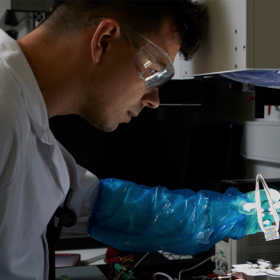
Breakthrough for producing perovskite solar cells with AI
Researchers at RMIT University’s School of Science, Monash University and Australia’s Commonwealth Scientific and Industrial Research Organisation (CSIRO) have harnessed artificial intelligence to accelerate the design and production of perovskite solar cells.
