Auditor of solar developer issues disclaimer on 2021 figures
As reported by pv magazine, BDO was not permitted access to the paperwork on 11 solar project companies sold by Shunfeng International in 2020 and, therefore, could not offer an opinion on the financial prospects of the business based on last year’s performance either, given the lack of comparative numbers.
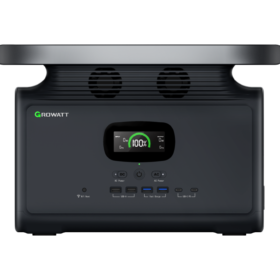
Growatt unveils solar rechargeable portable power station
Chinese inverter maker Growatt has launched Infinity 1500, a portable power station for off-grid applications.
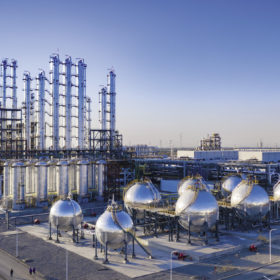
Chinese PV Industry Brief: Daqo reports polysilicon average selling price of $32.76/kg in Q1
Daqo announced its best quarterly financial results, with net profit reaching $535.8 million, while Sungrow saw its profit drop by 19%. Polysilicon manufacturer GCL-Poly changed its name to GCL Technology Holdings Limited and announced a plan to build another 100,000 MT polysilicon factory in Inner Mongolia in partnership with Zhonghuan Semiconductor.
JA Solar brings its M10 solutions to the European market
In an upcoming pv magazine Webinar, Chinese manufacturer JA Solar will present its M10 DeepBlue 3.0 modules based on gallium-doped technology for either rooftop or large-scale applications. The company’s senior technical manager, Ignacio Espinosa, discusses the advantages offered by the M10 technology.

Trade body expects China to add 90 GW of solar this year
Solar developer Beijing Energy reported a bumper prediction apparently made by the China Electricity Council, as the developer published its annual figures today.

Polysilicon giant planning more production capacity
Newly rebranded GCL Technology is laying plans to invest more than $1 billion into its output capability, as its latest set of quarterly figures again spelled out just how profitable the business is at the moment.

Polysilicon maker predicts 5-year shortage of solar raw material
TBEA-owned Xinte Energy says it cannot produce polysilicon quickly enough to meet demand and wants shareholders to back its bid to quadruple its manufacturing capacity by mid 2024.
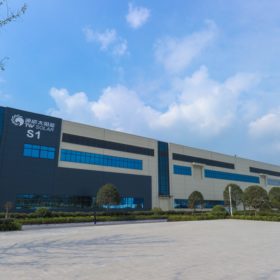
Chinese PV Industry Brief: Hoshine expands PV glass output, Tongwei raises cell prices
Hoshine plans to expand PV glass production, while Tongwei is raising PV cell prices, with a particular focus on monocrystalline cells. Maxwell Technology has secured a 4.8 GW production line order from India’s Reliance Industries, while JA Solar has reported a net profit increase of 35% for 2021.
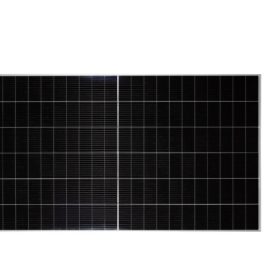
Eging releases 685 W TOPCon PV module with 22.05% efficiency
Chinese manufacturer Eging has unveiled a new line of bifacial TOPCon solar panels based on n-type wafers and 210 mm cells. The modules have a temperature coefficient of 0.31% and efficiencies ranging from 21.24% to 22.05%.
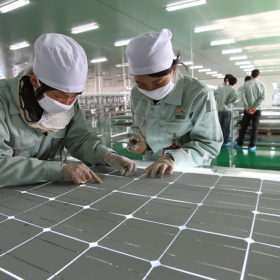
AI method learns from experienced staff on perovskite solar production lines
Academics from MIT and Stanford who have posited a new production method for perovskite solar cells have also developed a machine learning system which benefits from the experience of seasoned workers – and they’ve posted it online for anyone to use.
