
Best membrane for non-aqueous redox flow batteries
A Chinese-Finnish research team has identified composite membranes as the best future option for non-aqueous redox flow batteries.
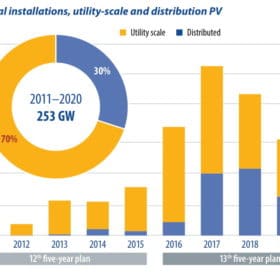
China reaches a tipping point in 2021
This year will be a key period in the development of China’s solar PV market. It is the first year of the 14th five-year plan, the first calendar year after President Xi Jinping announced the 2030-60 carbon emissions commitment, and the first year for utility and commercial unsubsidized projects. IHS Markit expects the solar industry in China to reach another milestone with more than 60 GW of installations this year, advancing the ground for the energy transition and the displacement of traditional energy sources to fulfill the goal of a net carbon future over the next four decades to come.
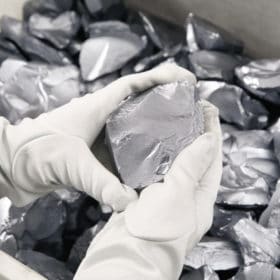
Tongwei became the largest polysilicon producer in 2020
A new report from Bernreuter Research reveals that Wacker Chemie lost its top spot in the 2020 global polysilicon rankings. It was also the only western company among the “Big Six” that are expected to form a new polysilicon super league in the PV industry. Overall, these six reached a total polysilicon capacity of 470,000 MT last year.
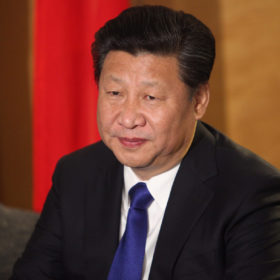
Chinese PV Industry Brief: Zhonghuan raises wafer prices as president calls for faster action on emissions
Henan province immediately responded with a plan to deploy another 20 GW of solar and wind by 2025.

New accountant to probe whether GCL project payment was between ‘related parties’
The near-$80 million handed over to a contractor in 2019, of which around $2.3 million was retained by the recipient, is now being investigated by an independent accountant. Meanwhile, GCL’s shares remain suspended because the payment issue is holding up its 2020 accounts.
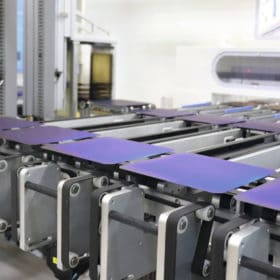
Jolywood signs mega-deal to supply 7 GW of household solar
Based on the price agreed for the first year of the five-year contract, the total deal would be worth almost $4 billion to the $1 billion company. However, with input costs rising and the state-owned sponsor likely to expect to pay lower fees for subsequent years, the TOPCon manufacturer’s margins may not remain so fat.
The weekend read: Life after PERC
The pursuit of higher conversion efficiencies is an eternal theme in the PV industry. Among all the links in the chain, cell technology is the most fundamental and decisive element. As we look beyond the established PERC technology, whether heterojunction or TOPCon will become the dominant “next-gen” solar cell among China’s manufacturing giants is emerging as a balancing act between incumbent and upstart, reports Vincent Shaw from Shanghai.
Chinese PV Industry Brief: Tongwei raises cell prices, Longi joins forces with Engie
The Chint Group has also said it was China’s largest PV plant owner at the end of 2020 with more than 5.7 GW in operation.

CNBM wants to set up GW-scale production of CdTe solar panels in China
German PV production equipment provider Singulus will supply the vacuum coating systems for the new production. The Chinese conglomerate currently operates CIGS panel production facilities at four different locations in China.
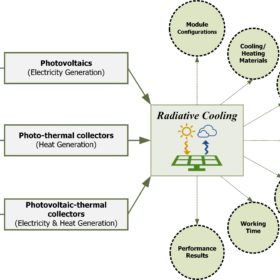
The best radiative cooling tech for PV arrays
Scientists in China have analyzed the radiative cooling techniques used in combination with solar energy systems such as PV arrays, solar thermal collectors, and concentrated PV installations. They identified five major system typologies based on functionality and working time.
