
ReneSola needs to sell projects as Romanian loan deadline looms
The Shanghai company’s decision to go forward as a pure play developer puts it at odds with its peers and the diminishing margins reported in its Q1 figures illustrate why it may prove to be a high-stakes gamble to bet against manufacturing.

Researching some cool new battery materials
Scientists from China and the United States have developed an additive for electrolyte materials they say could improve the operating temperature range for lithium-ion batteries, allowing them to operate down to minus 40 degrees Celsius without compromising performance at temperatures up to 60 degrees Celsius.
Cell and module prices falling in China
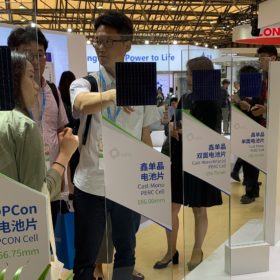
Taiwanese analyst Energytrend saw prices for high power products fall over the past week, but so far only in China. That trend could be replicated around the world next week, however.
Singyes shareholders left in the dark
Stockholders in the Guangdong-based business – one the highest profile victims of Beijing’s 5/31 policy about-turn to date – were yesterday due to learn when a crucial vote on a state-sponsored Chinese bail-out of the company will take place. Publication has now been postponed until August.

GCL Poly realizes swift $166m profit in Xuzhou to pay down debt
The polysilicon giant’s Jiangsu Zhongneng unit invested $196 million into a $487 million fund alongside public partners to promote clean energy manufacturing in the Chinese city. A stake sale in the Xinjiang GCL subsidiary, if approved by shareholders, will more than recoup the group’s outlay.
Reports Huawei has exited US solar inverter market
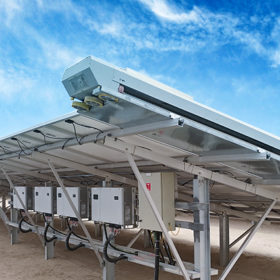
Roth Capital Partners has reported the inverter maker ceased U.S. sales on Friday, laying off all its U.S. citizen staff amid rising tensions between the Trump administration and China.
Saudi’s ACWA Renewables sells 49% stake to China’s Silk Road Fund
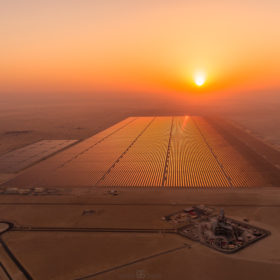
The Chinese state-owned infrastructure investment fund, which already has strong ties to the Saudi power company, will be a major shareholder in a Middle East and African clean energy portfolio that adds up to 1668 MW of generation capacity.
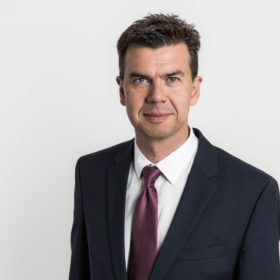
Goodwe plans to increase inverter capacity to 15 GW
In a chat with pv magazine, the managing director of GoodWe’s European unit, Thomas Haering, described the inverter manufacturer’s plans to expand capacity this year, after construction started on new factories in Suzhou and Guangde.
Shortage of polysilicon for mono-Si wafers lifts prices
Analysts have observed rising demand amid rumors of stock shortages. Meanwhile, the price of mono cells fell further, although not far enough as far as the big beasts of the PERC module jungle are concerned.
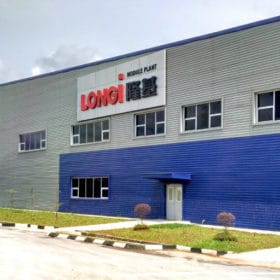
Longi to spend $349m on new 5 GW module fab in Taizhou
The world’s number one mono silicon module manufacturer will add another 5 GW to its annual panel production capacity in 2020 as it pursues 16 GW of output this year and 25 GW next year.
