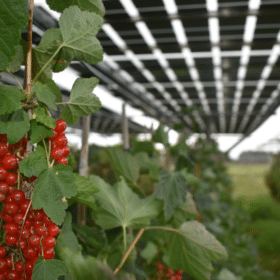
Baywa’s ‘fruitvoltaic’ project to bear fruit – 23 tons a year, in fact
A 1.2 MWp installation featuring more than 4,500 solar panels has sheltered a berry crop from high temperatures and damp to strengthen the claims made by agrivoltaics companies that their systems can offer climate change mitigation as well as clean energy.
Italy installed 625 MW of PV in 2020
The Italian PV market saw a year-on-year decrease in new PV installations last year. Residential PV systems up to 20 kW in size still accounted for the largest share, at around 250.4 MW of capacity.
Solar could help Azerbaijan consolidate gains in Nagorno Karabakh after recent conflict
That was just one of the revelations of the latest Dentons’ Guide to renewables investment in Europe, which also noted solar plants could be switched off in Slovakia, Ireland could go either way on clean power pricing, and Luxembourg is struggling with a surprising headache.
German start-up develops anti-reflective film claimed to improve PV module performance by 10%
German start-up Phytonics has developed the film by taking inspiration from nanostructures in plants. In solar cells, the film enables a broader absorption spectrum and a higher angle of light-incidence tolerance.

Solar could address Albania’s climate-change-sensitive hydropower dependency
Photovoltaics could offer peak generation at times of the year when the nation needs it most, says IRENA, but plenty will have to be done, including upgrading an aging grid and training an army of installers and building energy auditors.
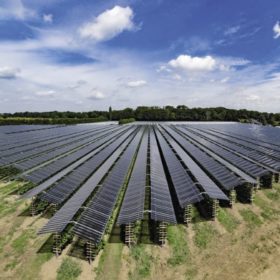
Baywa re seeks farmers for agrivoltaic project in France
The German renewable energy developer has already identified two potential partners, a beekeeper and a sheep breeder, to exploit 20 hectares.

Hanwha Q Cells files patent infringement suits against Astronergy in Germany
The legal action against Astronergy follows the patent lawsuit initiated by Hanwha Q-Cells in Germany, the USA and Australia, in March 2019, against Longi, Jinko Solar and REC.
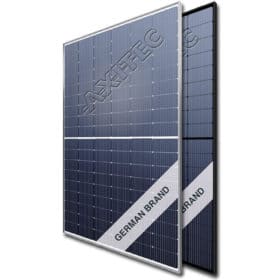
Axitec releases 540 W solar panels
German solar manufacturer Axitec has revealed plans to start selling its new half-cut PV modules from the second quarter. It manufactures the panels with 182 mm wafers.
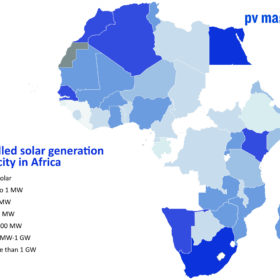
African green hydrogen could feed German and Japanese industry and water drought-stricken nations
Trade bodies the Africa Solar Industry Association and the African Hydrogen Partnership hosted a two-day virtual conference to discuss the role green hydrogen can play in economic growth across the continent–and how it could drive desalination in freshwater-starved coastal countries.

The weekend read: New pathways in flexible thin film PV
Having picked up GBP 5.8 million ($8 million) in a series of investments, U.K.-based Power Roll is pushing ahead with pilot production of an innovative new thin film with which it can manufacture both solar modules and capacitors. In the future, the design could also bring the potential for solar generation and energy storage within a single lightweight device.
