
Another day, another PPA in Spain
Days after announcing a deal to supply electricity from 326 MW of solar generation capacity, Spanish energy company Iberdrola has secured another long-term power supply contract.

French energy giants EDF and Total bet on artificial intelligence
The fossil fuel companies plus electrical systems business Thales have launched a joint research laboratory in Paris-Saclay to develop AI technologies to meet the needs of critical systems such as energy production facilities.
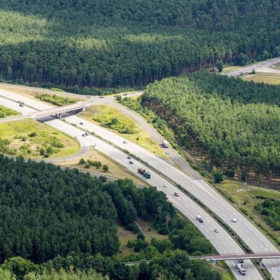
Court stops tree clearance for Tesla’s proposed Berlin gigafactory
The High Administrative Court of the Brandenburg region temporarily stopped preparatory work at the site in Grünheide, near Berlin at the weekend. A final decision from the local administration is expected “in a timely manner”.

The weekend read: Past the Arctic Circle, one degree at a time
Solar has a small but increasingly important role to play in the Nordic energy transition. And while there is still a gap in PV cost-competitiveness across some markets, interest in solar facades, BIPV solutions and C&I applications is growing.
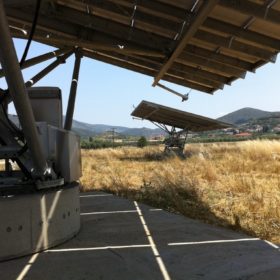
Greece to install 3 GW of solar in mining regions
Greece has announced plans to install two PV projects at mining sites. The facilities are part of the national utility’s new strategy and in line with the country’s efforts to phase out coal.
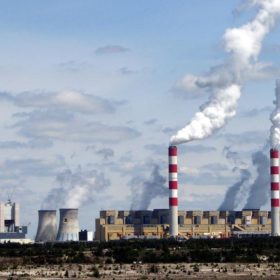
No more money for Polish coal
Polish power providers Enea and Energa have suspended construction financing for a new 1 GW coal power plant in northeastern Poland. According to the Europe Beyond Coal campaign, this could mark the beginning of the end for the $1.6 billion project. The two companies said their decision depended mostly on the new EU policy for the electricity sector and a lack of external financing.
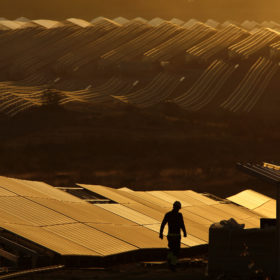
Another big solar PPA from Spain
Iberdrola has secured a long-term PPA from telecoms service provider Orange. The electricity will be delivered by a 328 MW solar plant that the Spanish energy group is building in Spain’s Extremadura region.
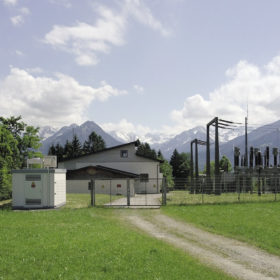
Storage Highlights 2020 – Gigawatt Winner: egrid and ads-tec
And so it is again. With the new decade, pv magazine brings forth yet another energy storage highlights. Approximately two weeks of work went into sifting through this year’s 22 highlights submissions, conducting research, and preparing them for the jury. Once again, this year’s work was crowned by the moderation of the jury meeting, in which six leading industry experts discussed the technologies and solutions. Differing from previous years, the jurors have selected the top five “Gigawatt” winners, followed by five “Megawatt” winners, and a series of “Finalists” which will be published in the coming weeks, leading up to Energy Storage Europe.
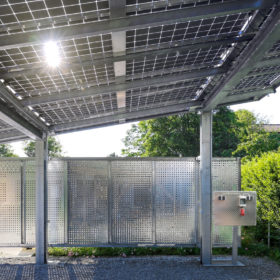
FuturaSun launches glass-glass mono module
The Italian manufacturer said the product has a 30-year performance warranty and strong resistance to adverse weather. The 330 W panel has a claimed efficiency of 19.78% with FuturaSun reporting the 325 W and 320 W versions have efficiencies of 19.48% and 19.18%, respectively.
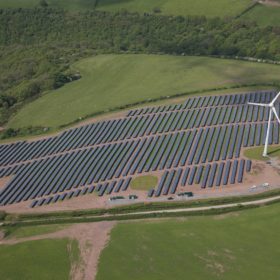
Vattenfall secures 10-year power supply deal for 60 MW of German solar
A Deutsche Telekom subsidiary has agreed to buy solar power from Vattenfall.
