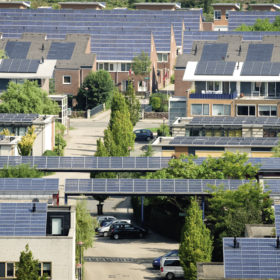
Netherlands’ solar installs top 2.7 GW
Around 700 MW of installed PV was connected to the grid in the Netherlands in 2017, according to provisional numbers provided by the Dutch Central Bureau of Statistics (CBS). Solar was also able to increase its share in the country’s power production from 1.30% in 2016, to 1.75% last year.
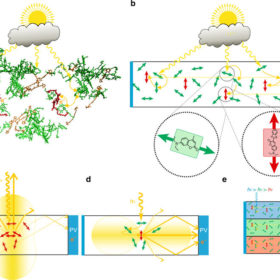
German researchers create ‘sunlight funnel’ to concentrate light onto solar cells
Scientists led by the University of Braunschweig have developed a new type of solar concentrator, which can concentrate light from any direction onto a small area, such as a solar panel. The researchers say that funnels can be tuned to different light wavelengths and stacked, allowing for conversion of the entire light spectrum into electricity.

Portugal issues new rules for selection of unsibisidized large-scale solar projects
The new provisions include a draw mechanism for the project selection. The results of the first draw will be announced in mid-March.
Luxembourg launches tender for solar over 500 kW
The government of Luxembourg has also adopted a new draft legislation aimed at regulating self-consumption and promoting the active role of prosumers.

Hungary’s oil and gas provider MOL enters solar business
The company will initially build solar facilities at three of its main industrial sites in Hungary, on currently unused areas.
Belgium sets record for power production from solar
On February 25, Belgium recorded the maximum amount of electricity produced by solar PV. Overall, it acounted for an impressive 21% of the country’s electricity consumption.
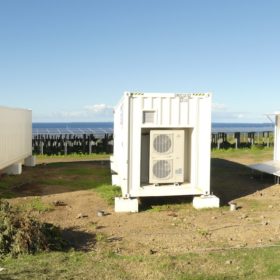
Storage Highlights countdown #3: SMA large-scale storage solution
As Energy Storage Europe approaches, pv magazine counts down the highest-ranked energy storage highlights, selected by our independent jury, that visitors to the exhibition can lay their eyes on. In third-place is SMA’s large-scale turnkey solution Medium Voltage Power Station for the global market.
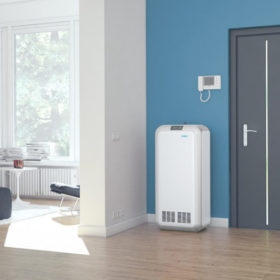
Storage provider Senec acquired by German utility EnBW
Germany-based distributed battery storage provider, Senec has been acquired by a major German utility.
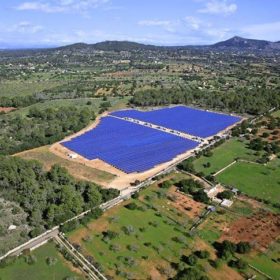
Spain: Enel, Hive Energy seek to develop more solar parks outside auction scheme
The Italian utility has started approval proceedings to build six “grid-parity” projects totaling 257 MW in the region of Extremadura, while the U.K.-based developer is planning to build a 45.6 MW solar plant for the spot market in Andalusia.
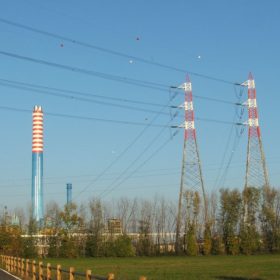
A2A closes its third PV deal in Italy
Following this new transaction, the combined capacity of solar PV assets owned by the Italian power and gas plant provider has surpassed 54 MW.
