The Hydrogen Stream: UK and Germany invest in tech, mobility and supplies
UK climate tech business Levidian has presented a new device. Loop hydrogen has a typical levelized cost of hydrogen (LCOH) of around £2.27/kg, the company told pv magazine. Meanwhile, companies are considering investment in the Celtic Sea, Hamburg, and Galicia and Toyota has announced that hydrogen-powered engine performance has been improved to levels comparable to gasoline engines in just six months.
Large-scale, high-temperature heat pump for district heating
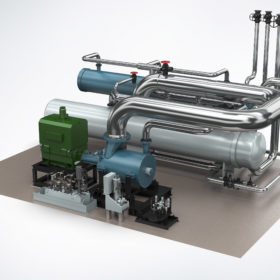
Vattenfall and Siemens Energy are building an 8MW heat pump for district heating applications in Berlin. The facility will be powered by wind and solar via the electrical grid and will provide heating and cooling to the local district heating network.
Schüco publishes warning due to potentially defective solar module backsheets
The PV manufacturer says there is a risk of electric shock in some of its solar modules due to defective polyamide backsheets. Products delivered between 2010 and 2012 are affected. According to Schüco, they should be uninstalled and disposed of.
Designs for solar+storage+hydrogen systems in buildings
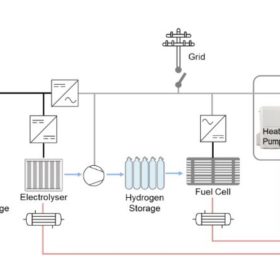
German scientists have tried to determine whether a PV system linked to a small electrolyzer, a fuel cell, and lithium-ion batteries could fully power a grid-connected household. Their new proposal consists of a 6.8kW PV array, a 5kW electrolyzer, a 1.24kW fuel cell system, and battery storage.
Quantifying loss-mitigating effects of PV warranty insurance
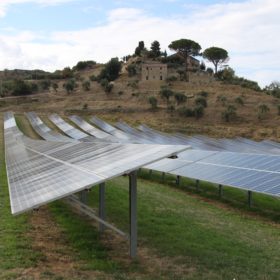
German consultancy VDE Renewables and global reinsurer Munich Re have outlined an approach to quantify the impact of risk mitigation measures applied to PV projects, as well as the advantages that may be derived by relying on an insurance solution. Risk mitigation expert Ulrike Jahn has spoken with pv magazine on how the new approach was shaped and what kind of performance issues should be taken into account by PV asset owners.
Large-area reference solar cell for high precision measurements
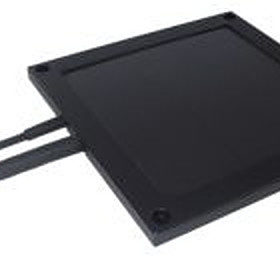
Germany’s Institute for Solar Energy Research (ISFH) has partnered with engineering company Mencke und Tegtmeyer GmbH (IB-MuT) to develop a large-area reference solar cell for high precision cell measurements. The BigRef device is claimed to be the only rugged encapsulated large-area reference solar cell available on the market.
1Komma5°, Enphase plan European virtual power plant relying on solar, storage, heat pumps and EV recharging
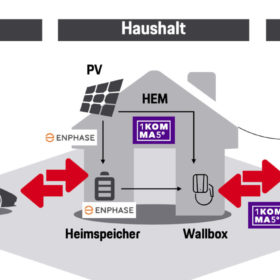
Through a strategic partnership, the two companies want to equip 1.5 million buildings in Europe with photovoltaics, storage systems, recharging solutions for electric vehicles, and heat pumps by 2030.
Above-bandgap light tech to improve performance of lithium-ion batteries, fuel cells
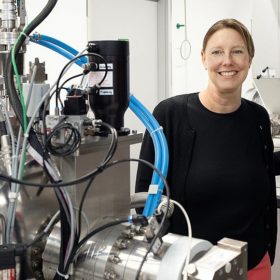
A US-German research group has used above-bandgap light to improve ion mobility in ceramic materials used in lithium-ion batteries and fuel cells. It found that the grain boundary conductance of gadolinium-doped cerium oxide, which is a ceramic used as a solid-state electrolyte in fuel cells, can be improved by a factor of approximately 3.5 at 250 degrees Celsius, by applying the proposed light technique.
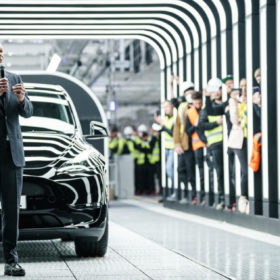
Tesla opens gigafactory in Germany
The first Model Y electric cars have rolled off the assembly line at the US electric car manufacturer’s first European factory.
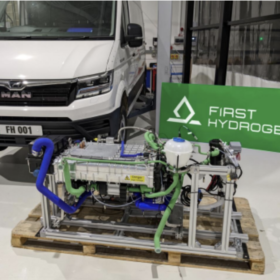
The Hydrogen Stream: New fuel cell electric vehicle from Canada
Elsewhere, the Fraunhofer ISE research institute has unveiled a new tool for high-resolution power-to-X kinetic analysis, and German entities have signed partnership agreements with the Abu Dhabi National Oil Company.
