
The Hydrogen Stream: Airbus plans flight test with direct combustion engine fueled by hydrogen
Elsewhere, Chinese researchers have synthesized ultrafine Pd100-xCux nanodot-modified TiO2 photocatalysts that display optimized energy barrier for interfacial hydrogen desertion, which reportedly exhibits excellent H2-evolution activity and stability, and Mitsubishi Heavy Industries has presented its plans to establish the Takasago Hydrogen Park, calling it the world’s first center for validation of hydrogen-related technologies, from hydrogen production to power generation.
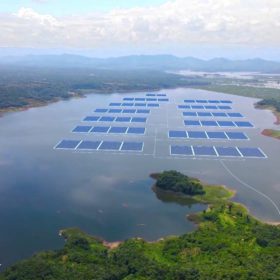
Masdar, partners eye solar exports from Indonesia to Singapore
Masdar will explore the development of 1.2GW of solar and potential storage projects in Indonesia for export to Singapore.
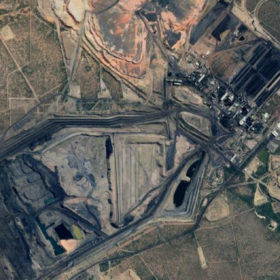
China and India to drive record world coal demand next year
Advances in solar power and other clean energy technologies have failed to keep up with demand for electricity as economies rebound from the Covid crisis and China and India’s fossil fuel appetite will ensure the world stays well short of what is needed for a net zero 2050 for at least the next three years.

New rules to boost Indonesian net metered rooftop PV
The new rules will increase the PV net metering factor from 0.65 to 100 and the credit accumulation period from three to six months.
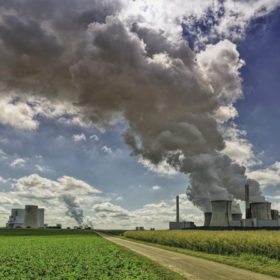
China holds the key to cancelling half the world’s new coal project plans
With pressure mounting on the world’s governments to turn their back on the fossil fuel, China and peers in South East Asia, Europe and South Asia could help deliver a coal-free future at the COP26 climate summit planned in Glasgow in November.
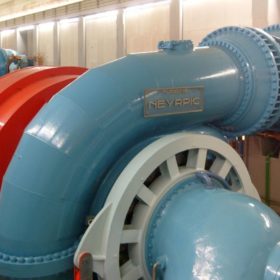
Indonesia moves forward with 1 GW pumped storage hydropower plant
The World Bank has agreed to finance part of a project owned by Indonesian state-owned utility, PLN. The facility is planned to enable a larger penetration of renewable energy to provide with power two large demand centers in West Java.
Regional strategy to turbocharge Indonesian solar
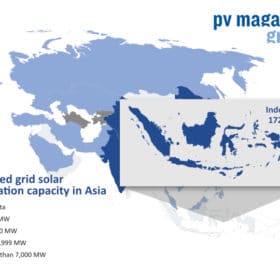
A roadmap to rapid carbon emission reduction has suggested the nation add 2.4 GW of generation capacity next year as part of a 15 GW new-solar target this decade. The claims of solar-plus-storage should be ignored for now, according to a new policy document, because batteries will make PV less competitive with coal.
Work begins on 145 MW floating solar plant in Indonesia
South-East Asia’s biggest floating PV installation is under construction by Masdar and Indonesian energy company PT PJB. The two companies secured a PPA for the project with state electricity company Perusahaan Listrik Negara (PLN) in January 2020. The agreed tariff is $0.0581/kWh.

Sunseap announces 2.2 GW floating PV project at Indonesian water reservoir
If built, the project would be the world’s largest floating PV power plant and would reach the same capacity as the largest ground-mounted facility currently in operation.
China to add 619 GW of solar this decade
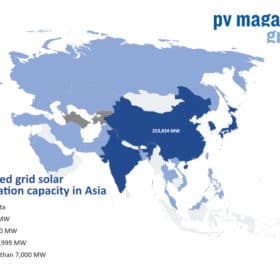
Indonesia will catch the eye too over the next nine years, according to analyst WoodMac, as its market grows from 300 MW to 8.5 GW.
