
Italy installed 937MW of solar, 431MWh of storage in 2021
The country’s cumulative PV capacity reached 22.56GW at the end of December.
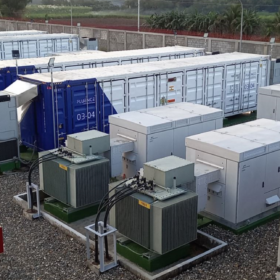
IHS Markit: Battery prices won’t fall until 2024
The London-based analyst has published a series of clean tech predictions for the year which also highlighted the rising proportion of sub-5MW solar projects in the global market, and cheaper clean energy financing costs even as panel prices continue to rise.

Italy speeds up permits for solar up to 200kW, allocates €267 million for rebates
The Italian authorities have introduced new provisions in the DL Energia decree to reduce energy bills for households and businesses. Italian companies will be able to secure rebates for projects and several southern regions have also been granted a fiscal break for rooftop PV and energy efficiency.
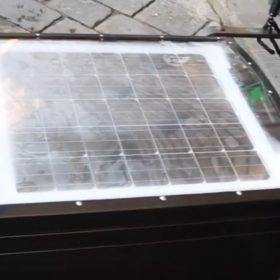
Solar-powered self compacting garbage can
The city government of Florence, in Italy, is installing solar-powered, self-compacting garbage cans that are claimed to reduce emptying operations by 94% compared to traditional bins. The devices were provided by Korean manufacturer Ecube Labs.
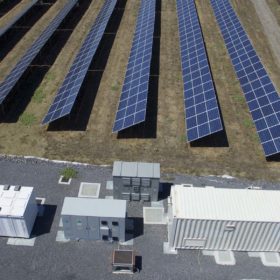
Enel to build 1.6 GW/6.6 GWh of storage under Italy’s capacity market scheme
The planned storage capacity will come from 20 projects selected by Italian grid operator Terna through the latest capacity market auction. Half of them will be located on the island of Sardinia.
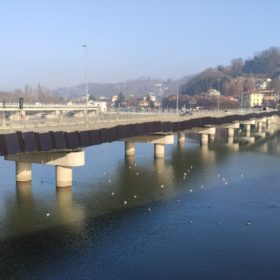
Single-row PV array comes online along Italian bridge
A 300m long PV system with a capacity of 71.5 kW has been deployed along a bridge crossing the Pò river in San Mauro Torinese, in northern Italy. The project was tendered by the municipality in June.
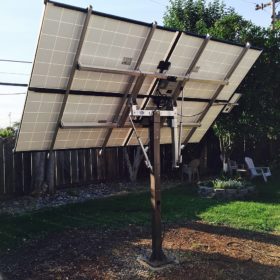
Enel, Comal plan 1GW solar tracker factory in Italy
Called Tracker Sun Hunter, the new factory will be located in an area of over 30,000 square meters inside Enel’s Montalto di Castro power plant which is no longer used for energy generation.
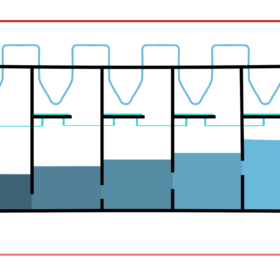
Photovoltaics for multistage flash desalinators
Scientists have investigated how utility-scale solar may be used to power multistage flashing-brine recirculation (MSF-BR) water desalination plants in Aqaba, Jordan. They found the facility would be sufficient to provide the entire city with drinking water. The proposed system configuration comprises a 30 MW solar plant and a standar MSF-BR unit.
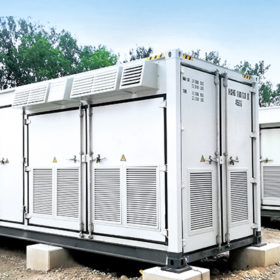
Italy’s third Capacity Market auction expected to open new opportunities for large-scale storage
The retirement of coal baseload capacity, some regulatory adjustments and high energy prices volatility could bode well for the deployment of batteries in Italy, and especially in Sicily. Problems, mostly related to the timing and the structure of the auction, remain, however. We spoke about it with Michele Scolaro, Aurora Energy Research Associate.
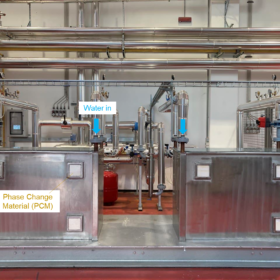
Latent heat thermal storage with PV for nearly zero-energy buildings
Researchers in Italy are combining PV with latent heat thermal storage (LHTM) and other renewable energy sources to maximize clean energy consumption in buildings. The 47kW PV array and LHTM system work independently, but the scientists said that a heat pump could be used to link them.
