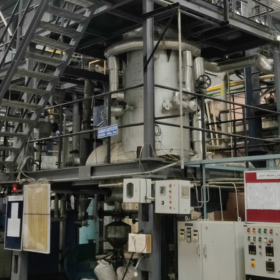
The Hydrogen Stream: Steam-based tech to produce 100 g of hydrogen from 1 kg of biomass
Researchers from the Indian Institute of Science (IISc) developed a two-phase hydrogen production technology that is capable of using steam to produce hydrogen from biomass. Furthermore, an Indian-Norwegian consortium is developing green ammonia in Oman, Toshiba is starting research on hydrogen production from geothermal energy, and Thyssengas is selecting personnel for the conversion of around 20% of its gas network.
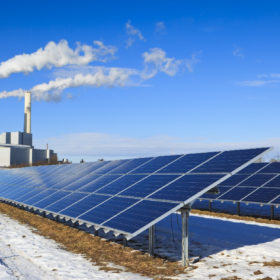
Solar power costs continued to fall in 2021, despite rising panel prices
The average global price of solar kilowatt-hours fell 13% on 2020’s prices, as around two-thirds of the renewables capacity installed last year was cheaper than the lowest-cost fossil fuel alternative.
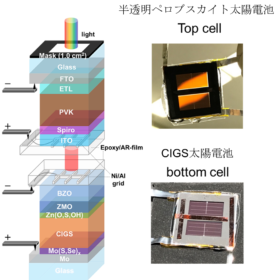
Four-terminal tandem perovskite/CIGS solar cell with 26.2% efficiency
Japanese scientists have developed a tandem device with a 19.5%-efficient perovskite top cell. They claim to have created a semi-transparent perovskite solar cell while maintaining high performance.
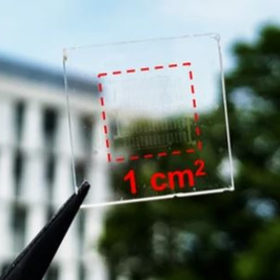
Near-invisible solar cell based on tungsten disulfide photoactive layer
Japanese scientists built a near-invisible solar cell based on indium tin oxide (ITO) and tungsten disulfide (WS2) as a transparent electrode and a photoactive layer, respectively. The cell has the potential to achieve a transparency of 79%.
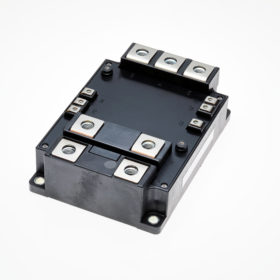
Mitsubishi Electric unveils power-switching transistor for solar
Mitsubishi Electric’s new 2.0kV LV100 semiconductor device is based on its insulated-gate bipolar transistor (IGBT) technology and Relaxed Field of Cathode (RFC) diodes. It is designed for industrial applications that need “middle-ground” power converters between DC1500 V and 3.3 kV.
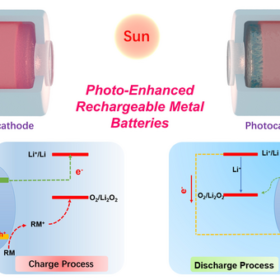
Photon-enhanched rechargeable batteries for solar storage
Japanese scientists have analyzed storage systems that combine PV and high-energy-density metal batteries. The rechargeable batteries have advantages such as low-charge voltage and high energy density, but stability and safety must be addressed before they reach commercial maturity.
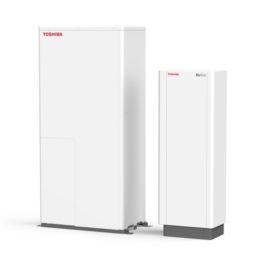
Toshiba expands fuel cell business
Toshiba is cooperating with Swedish battery specialist Echandia to develop pure hydrogen fuel cells that could be used for continuous operation in marine applications.

Japan allocates 153.7 MW in solar auction
Japan’s latest procurement exercise was open to PV projects above 250 kW in size. The ceiling price was set at JPY 10 ($0.074)/kWh.
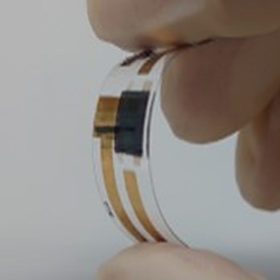
Thin-film flexible piezoelectric-photovoltaic cell based on selenium
Japanese scientists have developed a piezoelectric-photovoltaic cell with potential applications in indoor environments. They fabricated it on a flexible polyethylene terephthalate film with sputter-deposited ZnMgO thin film and photo-absorbing selenium as the n-type window layer and p-type layer, respectively.
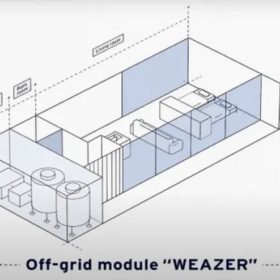
Solar-powered offgrid residential unit from Japan
Japan’s Arth has designed an autonomous habitation module that produces water in places without energy and water infrastructure. The company said the residential unit could also be used as an emergency evacuation site.
