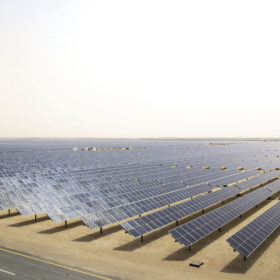
Huge Vietnamese solar park could hit 2.8 GW within a year
An energy transition investment report published this week has also revealed the former world record low price for solar power announced by the Al Dhafra project in Abu Dhabi last year, has fallen even lower since.
Hold your breath for a better battery
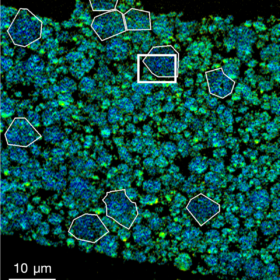
Recent research has revealed a previously underestimated role for oxygen in limiting the performance of lithium-ion batteries. Newly published research from both Japan and the United States has sought to look deeper into the chemical reactions at the heart of lithium-ion storage; and to better characterize the cumulative effects that minuscule amounts of oxygen released during these reactions can have on battery performance and safety.
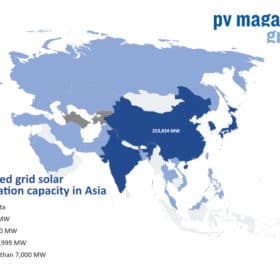
China to add 619 GW of solar this decade
Indonesia will catch the eye too over the next nine years, according to analyst WoodMac, as its market grows from 300 MW to 8.5 GW.

The Hydrogen Stream: Italy’s Eni lays out plans in Algeria and Egypt, UAE joins race with help from Japan
Italian energy company Eni is partnering with local companies in Algeria and Egypt to explore the possibility of producing green and blue hydrogen in the North African countries. The United Arab Emirates is also collaborating with Japanese partners to develop the country’s hydrogen sector, while in New York, hydrogen has arrived in Long Island.
New renewables cheaper than legacy coal or gas for almost half the world’s population
Electricity bill payers in nations as diverse as Germany, Greece, India and China should be aware new solar projects can now generate electricity cheaper for them than legacy coal and gas-fired plants.
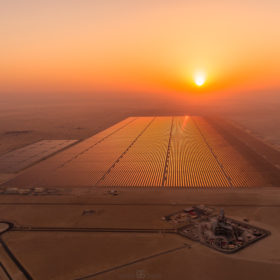
‘Low-cost renewable hydrogen may already be in reach’
If the three record-busting low solar price tariffs recorded in the Middle East in the past 18 months are to be believed, renewables-powered hydrogen in prime sites in the region could already compete with gas-plus-CCS production, according to IRENA. Has the Gulf discovered the new petrol?
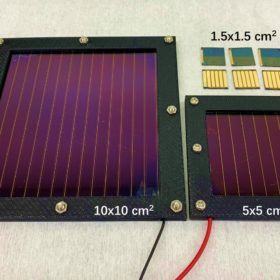
New perovskite material for 23.5%-efficient solar cell
Researchers in Japan have found a new way to fabricate one of the most promising perovskite materials for PV application — the α-formamidinium lead iodide known as α-FAPbI3. With a pre-synthesized version of this material, they were able to produce a cell with a power conversion efficiency of 23.5% and a lifespan of more than 2,000 hours.
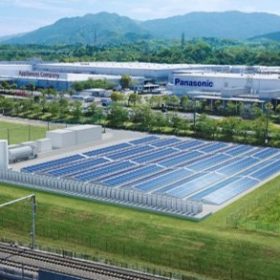
Panasonic combines hydrogen fuel cell generators with PV and storage
The pilot project is combining hydrogen fuel cell generators with a combined capacity of 500 kW with a 570 kW solar array and 1.1 MWh of lithium-ion batteries. It is planned to come online in the spring of 2022.
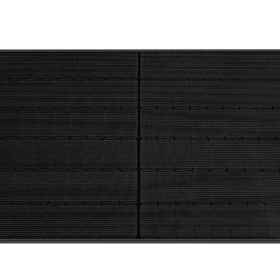
Panasonic launches 380 W heterojunction solar module compatible with its Evervolt battery
The new module series has a power output ranging from 370 to 380 W, a temperature coefficient of -0.26% per degree Celsius, and an efficiency of up to 21.7%.
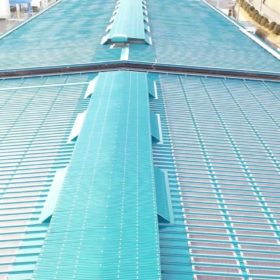
Off-grid rooftop solar with metal-wrap-through solar modules
Chinese MWT solar module manufacturer Sunport has provided its S1 product for a solar-plus-storage commercial rooftop PV project in Japan. The array is linked to 165 kWh of storage and is equipped with flexible solar panels that weigh 1.3kg each.
