
Covid-19 weekly round-up: Dormant MiaSole claims Covid support in the US as Indian new solar figures slumped
Plus, analyst WoodMac says a fall in the cost of power generation in Japan during the public health crisis will help drive renewables investment and the Indian government has relaxed borrowing rules for its financially crippled electric utilities.
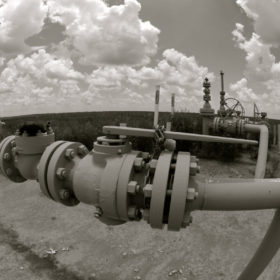
Global green hydrogen project pipeline reaches 50 GW
International thinktank IEEFA says there are 50 viable green hydrogen projects under development with an estimated renewable energy capacity of 50 GW and the potential to produce 4 million tonnes of the fuel annually.
New pathways for tin-monosulfide PV
Scientists in Japan have developed a new process for the fabrication of crystalline tin monosulfide (SnS). By facilitating the growth of crystals measuring up to 24mm in diameter, the process could help overcome some of the challenges to squeezing higher efficiencies out of this cheap, abundant material.
Embracing the 600 W+ Era
Solar modules are getting more powerful. This much was clear walking the show floor at the SNEC show earlier this month in Shanghai, where leading manufacturers all exhibited products with power ratings in the 600 W+ range. In this pv magazine Webinar, hosted in partnership with Trina Solar, we’ll take a closer look at the technologies inside Trina’s Vertex module, and why its impressive performance is about much more than simply making the module larger.
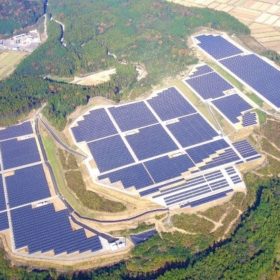
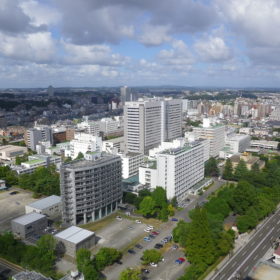
Japan’s struggle to drive down renewables costs
A nation famous for high electricity prices has seen power costs fall 15% this year, according to analyst Wood Mackenzie, a figure which will help attract $100 billion of solar and wind investment to 2030. Renewables will have to work even harder, however, to displace fossil fuels in hydrogen production.
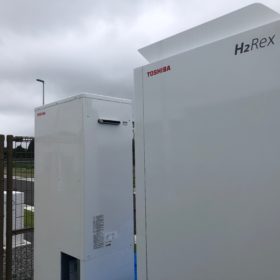
Toshiba’s power and heating hydrogen solution
The Japanese electronics giant has deployed a 3.5 kW hydrogen fuel cell system for at its Michinoeki-Namie site in the Fukushima prefecture. The fuel will be provided by the company’s 10 MW Fukushima Hydrogen Energy Research Field nearby.

Testing CPM-based passive cooling for CPV systems
An international research team has tested change material heat sinks for heat management on a concentrator photovoltaic system. It found that increasing over height ratios lowers the formation of stratified liquid layers, which in turn reduces the potential hot spots in the upper part of the solar cell.
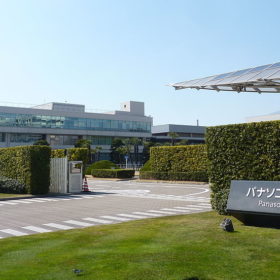
Panasonic abandons Chinese solar manufacturing tie-up
The Japanese electronics giant said a partnership with GS-Solar will not materialize and it will continue producing its modules in Japan and Malaysia while seeking other cooperation opportunities.
Hitachi-ABB Power Grids takeover could boost e-mobility and energy storage
The Japanese brand has closed the initial $6.85 billion purchase price for 80% of the Power Grids business that was owned by ABB. The buyer will have the option of purchasing the outstanding shares in 2023.

IEA report appears to acknowledge 2050 net zero may be beyond us
A study into the clean energy tech innovation rate required to keep global heating under control may suggest concepts such as lithium-air could yet keep us to the mid-century ambition, but it is also starting to contemplate the temperature rise to be expected if we only achieve net-zero by 2070.
