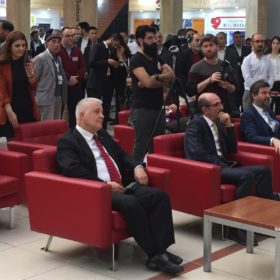
Four takeaways from Solarex
All the fundamentals are in place for Turkey to be a leading light in solar but an all-too-familiar lack of policy certainty, coupled with a troubled macroeconomic backdrop, mean the nation is still unable to realize its PV potential.
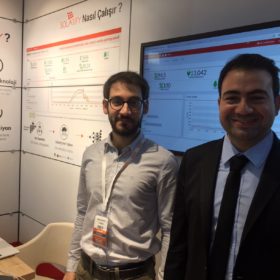
Solar AI: Made in Turkey
Celebrating its one year anniversary during Solarex, Turkish monitoring and AI startup Solarify is looking to reduce false alarms from utility scale PV projects. Based out of an incubator in Ege University in the coastal city of Izmir, Solarify is on the hunt for international partners.

Foreign modules tied up in red tape at the Turkish border
As the Turkish market cools as the result of a policy vacuum, rumors are now circulating that its developers and installers are being hampered by restricted module imports. While some exceptions apply, claims are the measures, described as “blatant protectionism” by some are damaging the market.
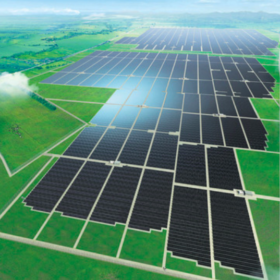
Sharp launches three new mono-PERC modules with 19.1% efficiency
Sharp has released three new high-efficiency mono-PERC solar panels. Ranging from 300 W to 370 W, the five-busbar modules are designed for use in a range of applications, from residential PV projects to large commercial installations.

Exponential or slow growth?
The Turkish solar market finds itself at a crossroads in 2019, with previous policy settings coming to an end and more questions than answers being raised by recent government efforts. While the YEKA projects to date have delivered little in terms of installations, Muren Guler from Global Energy Ltd believes that ‘Mini YEKA’ could provide just the boost manufacturers, suppliers, and developers are looking for.
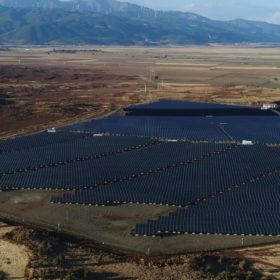
Mega projects, mega problems
The clouds gathering over Turkey’s 1 GW solar park in Konya, the first YEKA tender, are dominating discussion among the country’s PV players. Developments surrounding the Konya tender illustrate the Turkish solar market’s challenges, as the country’s unsteady economy and its policy preference for local manufacturing appear to be acting as a brake on installations.

What sustainable solar means to Turkey
There is no denying that Turkey is an ideal fit for a major solar market and key player in the PV sector, located on the border between east and west. But while the country has shone as a solar star this decade, writes Eren Engür, Managing Partner at Icarus Energy, it is quickly fading as the government has failed to promote a sustainable solar sector. However, this could be about to change.
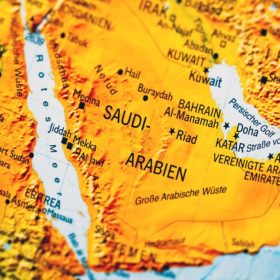
Renewables & geopolitics: Saudi Arabia
In the third in a series of interviews on renewable energy and geopolitics, Indra Overland — head of the Center for Energy Research (NUPI) and a research panel member for the Global Commission on the Geopolitics of the Energy Transition at IRENA — discusses how Saudi Arabia is dealing with the energy transition. He also outlines the challenges the Middle Eastern country will face in the coming decades, as it shifts to a less oil-dependent economy. Although the country recently set new solar and renewable energy targets, Overland believes that the geopolitical balance in the Middle East could shift to countries such as Iran in the coming decades, even if the Saudi commitment to renewable energy proves genuine.
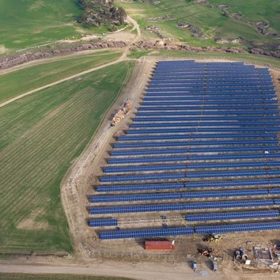
Cyprus set to install its first battery storage and blockchain systems
The University of Cyprus announced plans a few years ago to build a solar PV farm in the United Nations buffer zone in the capital city of Nicosia. The project is finally coming to fruition, but with two additional elements: battery storage and testing for a blockchain system.
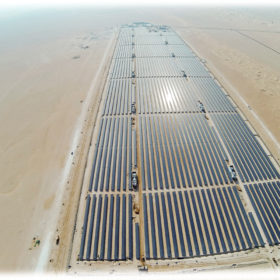
Phase IV of 5 GW Mohammed bin Rashid Al Maktoum Solar Park reaches financial close
Phase IV of the huge solar park includes a 700 MW CSP plant and a 250 MW PV facility. Funds for the $4.2 billion project will be provided by banks from the United Arab Emirates and China, as well as other international lenders.
