
Putting the strain into engineering a more stable perovskite
U.S. researchers claim to have improved the stability of one of the most promising halide perovskites – α-FAPbI3 – by squeezing the compound’s crystal lattices. The authors of the research prevented the crystal assuming an hexagonal shape at the room temperatures required for a PV device to operate properly.

A new perovskite material for solar applications
Barium zirconium sulfide is another chalcogenide perovskite being tested in relation to the development of more efficient solar cells. Researchers at Buffalo University, in New York state, have created a thin-film based on the material they say offers significant light absorption and good charge transport.

The world will add 142 GW of new solar this year
IHS Markit has predicted another year of global solar growth but a peek behind the headline figures shows uncertainty dogging the markets of China and India, two of the most important markets and biggest polluters.
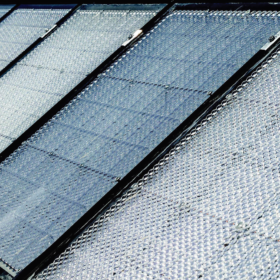
The year in solar, part III: Battery breakthroughs, inverter trouble, sustainable role models and new tech
Storage has long been expected to be the handmaiden of a renewable energy world and its long awaited advances started to finally emerge in the third quarter as researchers posited R&D achievements ranging from potentially potent tungsten disulfide nanotubes to the business case for 10-year solar panels.
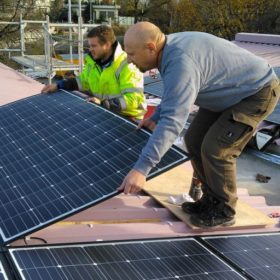
Residential solar set new US record in the last quarter with 712 MW
The U.S. residential solar market – and 15 states – are at record highs according to analyst WoodMac’s ‘don’t call it a comeback’ Q3 report, driven by new market forces. The research firm held its 2019 U.S. solar forecast at 13 GW.

Renesola exits Vietnam, India and Korea
The Shanghai-based project developer – which will soon relocate to the U.S. – says the profit margins are not high enough in those markets and has cancelled its project pipeline in the nations. The company has also changed its CEO after less than five months and is on a drive to reduce capital costs.
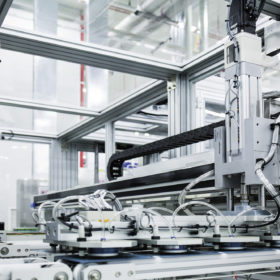
Hanwha Q Cells opens largest solar factory in the Western Hemisphere
The 300,000 sq ft factory in Dalton, Georgia has the capacity to produce 12,000 PV modules per day – 1.7 GW worth annually for panels able to produce the same peak generating capacity as the Hoover Dam.

Exciting excitons
A research team from Columbia University has designed organic molecules that can produce excitons with a longer lifecycle than inorganic equivalents. The excitons have the potential to amplify the amount of electricity generated by the photons a solar cell absorbs.

New York Senate passes the biggest renewable energy mandate in the US
The 70%-by-2030 renewable energy provision in legislation S6599 is second only to Washington DC’s 100% by 2032 aim, and includes targets of 6 GW of distributed solar by 2025 and 3 GW of energy storage by 2030. It is expected to pass the assembly today.

Norwegian wafer maker and US mounting system supplier join the solar gold rush
It is not just the big beasts of Chinese solar that are investing in aggressive expansion as high-efficiency wafer maker NorSun and tracker supplier GameChange Solar make big announcements. The New York company, however, may fall foul of President Trump’s America First trade mantra by opening production lines in the Far East.
