
Canadian Solar closes UK refinancing deal, signs 105 MW O&M contract in Canada
In the U.K., Canadian Solar Inc. has closed a refinancing deal worth GBP41.9 million (US$56 million) with BayernLB. Meanwhile, in Canada, it has signed an Operation & Maintenance (O&M) agreement with Axium Infinity Solar LP for eight PV plants totaling 105.5 MW.
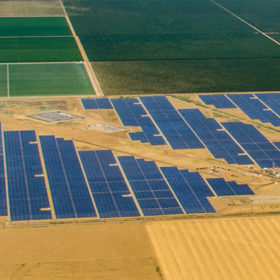
US renewables replace coal and gas in 2017
The output of all the main sources of thermal electricity generation declined in the first nine months of this year, as hydro, wind and solar boomed and demand fell.
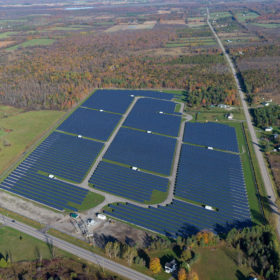
Renewables rising in Canada, but solar still sidelined — report
Renewable energy developers connected roughly 1.29 GW of new capacity to the Canadian grid in 2016, but solar remains a negligible part of that growth, accounting for just 0.5% of total nationwide electricity generation last year, according to the National Energy Board (NEB).
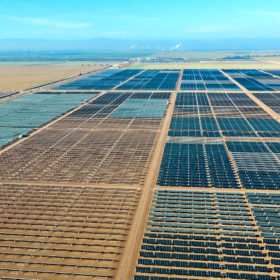
US researchers model alternatives to farmland for PV deployment
A team of scientists from the University of California has published a study, which says the state could meet 100% of its electricity demand up to 2025 from PV, without having to deploy a single panel on productive farmland or protected natural areas.

Tremendous demand: An interview with First Solar CEO Mark Widmar
In this interview Mark Widmar talks about the market for PV modules and his company’s supply situation, First Solar’s position in the Section 201 case, and the role he sees for solar in the future of energy.
Solar Frontier sells California solar project to X-Elio
The U.S. development division of the Japanese thin film PV maker has now developed and sold six utility-scale solar projects totaling 173 MW.

Floating electrolyzer for PV powered hydrogen
Scientists at New York’s Columbia University have a developed a floating device, which uses PV generated electricity to convert seawater into hydrogen.

Trump team argues strongly for tariffs
Reports say an unreleased memo circulating within the White House lays out arguments for the strongest of trade sanctions against Chinese solar module makers in what is likely a bad sign for U.S. solar markets.

Photovoltaik-Institut Berlin (PI) acquires Solarbuyer
Through the merger with the U.S. company, the Photovoltaik-Institute (PI) wants to gain a foothold in the world’s second largest photovoltaic market, the United States.
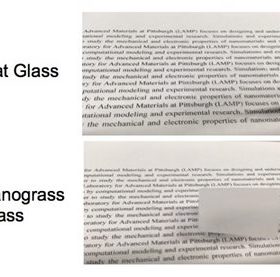
Researchers develop ‘grass like’ light-scattering nano structure for solar glass
A team of scientists from the University of Pittsburgh have created a glass surface with an etched nano structure that allows for up to 95% light transmittance, and can also scatter the light entering the glass, so that more light reaches a solar cell beneath.
