TOPCon heads to the rooftop
This year has seen solar manufacturers begin what is shaping up to be a major shift toward n-type technologies, and investors are keen to see these technologies in action in ‘real world’ installations. In this pv magazine Webinar, we take a look at the latest in TOPCon technology from one of n-type’s earliest backers, and share case study details from one developer already installing these modules and monitoring their performance in the field.
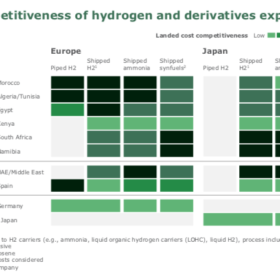
The Hydrogen Stream: Africa could become key green hydrogen market by 2050, says Masdar
Masdar says Africa’s annual hydrogen exports could hit 40 million tons by 2050, while Israeli researchers have published a new study on the discharge characteristics of oxidized intermediates formed under water photo-oxidation conditions.
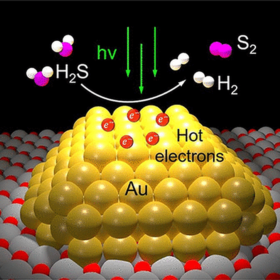
The Hydrogen Stream: Hydrogen production from industrial byproducts
US scientists have reported efficient plasmonic photocatalysis for the production of hydrogen from hydrogen sulfide, with no external heat source. Egypt, meanwhile, has started commissioning Africa’s first integrated green hydrogen plant.

Subsea cable to bring wind, solar power from Egypt to Europe
Copelouzos Group plans to lay a submarine cable to link 9.5 GW of wind and solar power in Egypt to Greece’s Attica region. The project was recently included in the Entso-E 10-year development plan.

Off-grid solar continues to expand
The off-grid solar sector has shown resilience in the face of pandemic-related challenges, with 70 million people gaining access to electricity from early 2020 to the end of 2021. However, the ability to pay for solar energy kits has taken a hit.
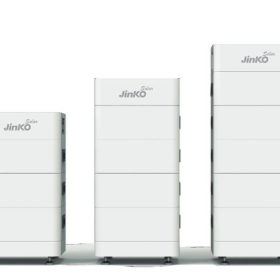
Storage could reshape solar market in MENA
Waleed AlHallaj, the head of business development for the Middle East and North Africa (MENA) at JinkoSolar, recently spoke to pv magazine about the prospects for the regional energy storage market. He said that storage systems have already penetrated markets with weak grids, such as Yemen and Lebanon.
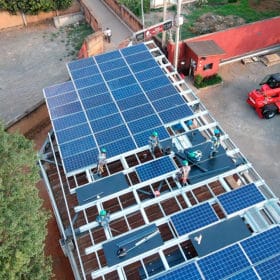
Equity investment to back 150 MW of commercial solar in Africa
Norwegian developer Empower New Energy has secured $74 million of mostly public funds from investors and will top it up to build a $100 million, three-year cash pile.
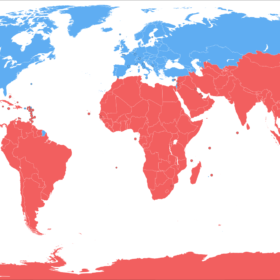
The Global South’s solar e-waste problem
An international research group has examined the structural barriers to addressing the solar e-waste problem in the Global South. They argue that the focus should be on repairing devices, rather than recycling them.
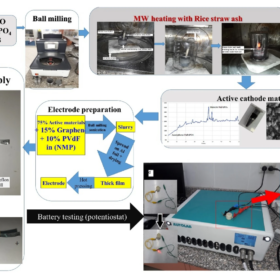
Ultra-fast synthesis of nanocomposites for sodium ion batteries, supercapacitors
Researchers in Egypt have developed a synthesis method that uses the high microwave absorbance of silicon carbide content in rice straw ash and takes just 60 seconds to produce sodium iron phosphates-carbon nanocomposites (NaFePO4-C), which can be used as sodium ion battery cathodes and as symmetric supercapacitors.
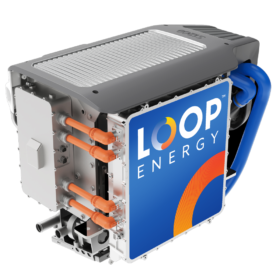
The Hydrogen Stream: Canadian startup unveils 120 kW fuel cell system
In other news, Alstom tested its hydrogen train for long-distance transportation and the IEA released a report suggesting that hydrogen development may require an annual investment of around $60-130 billion through 2030.
