
The Hydrogen Stream: ITM Power shifts business focus to PEM electrolysis
ITM Power says it has restructured its business to shift its focus from hydrogen refueling to PEM electrolysis tech, while Stahlwerk Thüringen and gas network operator Ferngas have agreed to connect the Unterwellenborn steel mill in Germany to a hydrogen network by 2027.
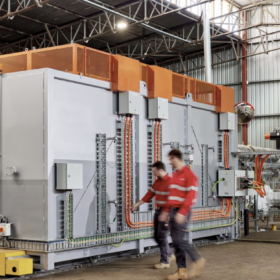
Australia commissions molten silicon energy storage system
Australia’S 1414 Degrees has commissioned a demonstration module featuring its thermal energy storage tech. It harnesses the high latent heat properties of silicon to provide a potential zero-carbon solution for use in high-temperature industries.
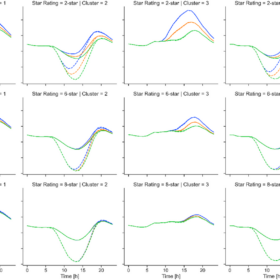
Mitigating residential duck curve via solar pre-cooling
Solar pre-cooling consists of using residential PV systems to run air conditioners to pre-cool residential and commercial buildings. It offers benefits in terms of mitigating low minimum demand in electricity networks, flattening the grid’s net demand profile, and reducing electricity bills.
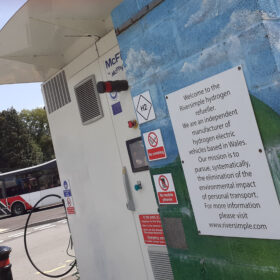
Green hydrogen offtakers can shape the industry’s development
With strong government backing; a systems approach to development that views each component of hydrogen production and delivery as a whole; and growing demand, Australia could be on track for a commercially viable green hydrogen industry by 2030.
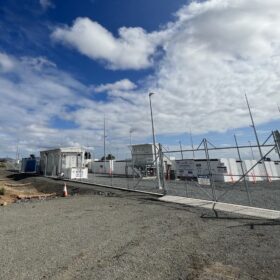
Batteries overtake pumped hydro in Australia’s National Electricity Market
Grid-scale battery storage systems have surpassed the charging capacity of pumped hydro in Australia’s national grid, following the recent completion of two new battery projects, totaling 150 MW.
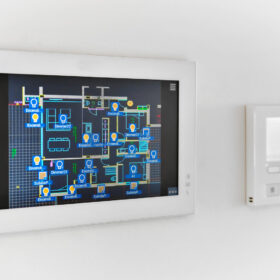
Australia to source 5 MW of flexible demand in smart buildings project
Australia’s Commonwealth Scientific and Industrial Research Organisation (CSIRO) will lead a “smart buildings” pilot project that has the potential to create a new ecosystem of technologies and solutions to support flexible demand for energy.
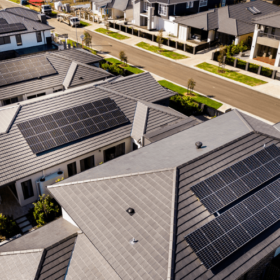
Average rooftop solar system sizes surpass 9 kW in Australia
The average size of rooftop solar systems installed in Australia has climbed to a new high, with data analysis from the Australian Energy Council showing the typical unit size is now averaging more than 9 kW.
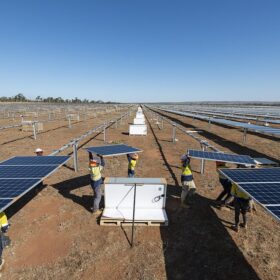
Australia’s latest tender for generation, storage largely oversubscribed
Investors have submitted bids for 3.1 GW of wind and solar projects, along with 1.6 GW of long-duration storage projects, in response to the New South Wales government’s latest tender for renewable energy generation and storage capacity.
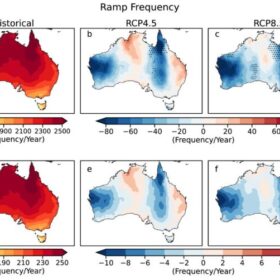
Modeling shows how solar ‘ramps’ threaten Australia’s grid stability
PV developers in Australia are being told to anticipate more frequent solar power fluctuation events, or “ramps,” which could potentially affect the stability of grid-connected solar power.
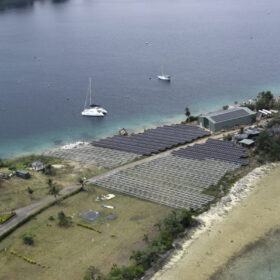
Financing implementation of solar energy solutions in the Pacific Island countries
The International Solar Alliance said that securing financing for renewable energy projects in Pacific Island Countries (PIC) may be complex due to the need for stand-alone solar energy systems and mini-grids, which to be viable for larger investments would require aggregation at a sectoral or programmatic level to become feasible. In its monthly column for pv magazine, the organization describes the types of finance required to scale technologies.
