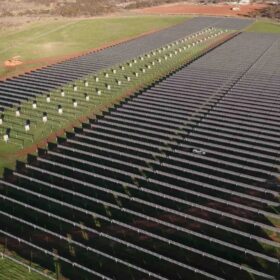
Flow Power claims Australian first at new smart solar farm
Renewable energy retailer Flow Power claims that the integrated technology behind a new “smart” solar farm in the town of Berri, South Australia, is the first of its kind to be switched on in Australia.
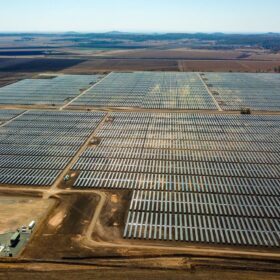
Australian firm appeals to landowners with new PV development model
The question of where to put new solar projects in Australia is becoming troublesome, as many of the top-choice land parcels for renewables development have been taken. However, RELA Australia says it has a novel solution that levels the playing field between landowners and developers.
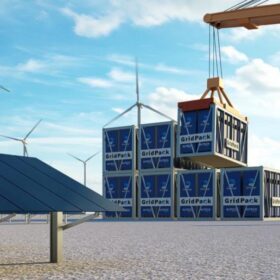
Australian manufacturer reveals 1 MWh sodium chloride battery design
Altech Batteries, a battery tech company in Western Australia, has included “game-changing” sodium chloride technology in its new battery 1 MWh GridPack. It said it expects the new systems to be up to 40% cheaper to produce than dominant lithium-ion alternatives.

Australia to earmark $10 billion fund to support clean energy manufacturing
Both houses of the Australian parliament have approved plans to establish an AUD 15 billion ($10 billion) national reconstruction fund to support domestic manufacturing in future industries and reduce the nation’s dependence on imports.
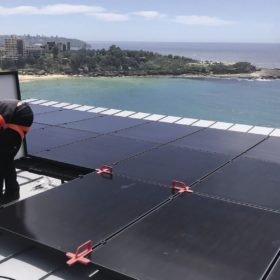
Making the business case for solar-plus-storage
Much has been said about the benefits installing solar and batteries can offer to businesses but, as companies face mounting input cost inflation, is the upfront investment too much to bear or have volatile electricity costs made the decision a no-brainer?
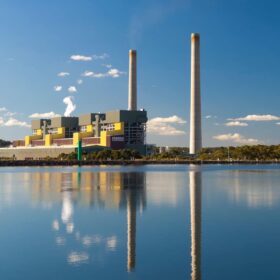
Brookfield buys Origin Energy for $12.5 billion
A $12.5 billion (AUD 18.7 billion) takeover deal for Origin Energy has been struck with a consortium led by Canadian giant Brookfield. Brookfield’s vision for Origin Energy involves spending “at least” AUD 20 billion to build new renewables and storage.
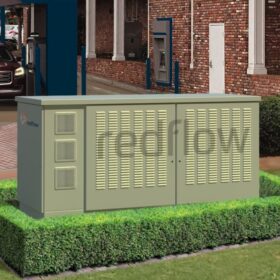
Redflow to work with Ameresco on solar-plus-storage solution
Australian battery manufacturer Redflow has signed a deal that will see it supply its “non-lithium” energy storage technology to clean energy outfit Ameresco which is looking to develop integrated solar and zinc-bromine flow battery solutions for its customer base throughout North America and Europe.

Australia hits new rooftop solar record
Residential rooftop solar supplied a record 14% of Australia’s electricity this summer – contributing more than brown coal and more than large-scale wind farms and solar projects.

New Zealand moves forward with 8.5 TWh pumped hydro project
The New Zealand government will investigate the viability of establishing a pumped hydroelectric facility on the South Island. The project could provide up to 8.5 TWh of annual generation and storage capacity to support the nation’s transition to 100% renewable electricity generation.
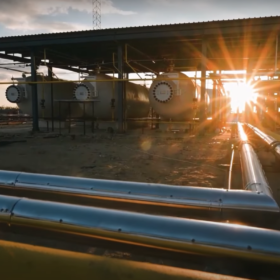
Bureau Veritas reports strong interest in hydrogen certification
Bureau Veritas tells pv magazine that there is a great deal of interest in hydrogen certification schemes in Europe, Australia, the United States, and the Middle East.
