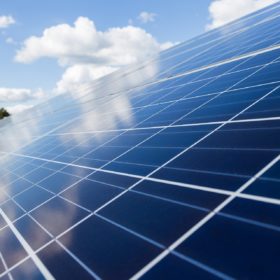
Solar could help Azerbaijan consolidate gains in Nagorno Karabakh after recent conflict
That was just one of the revelations of the latest Dentons’ Guide to renewables investment in Europe, which also noted solar plants could be switched off in Slovakia, Ireland could go either way on clean power pricing, and Luxembourg is struggling with a surprising headache.
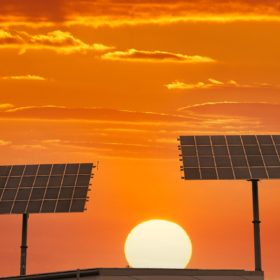
Holographic film to protect solar panels from overheating
Russian scientists have developed a holographic film based on prismatic concentrators that reduces the operating temperature of solar panels, including thermal-photovoltaic devices. They claim the patented, low-cost technique can even improve PV module efficiency in cloudy weather.

Russia introduces net metering for small-sized PV
The new net metering provisions came into force three years after the legislative process was launched. Power surplus will be sold to the grid at a rate of up to RUB2/kWh ($0.026).
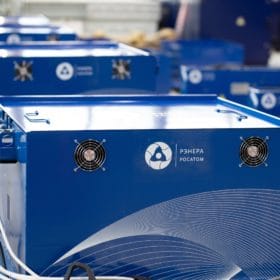
Rosatom plans 2 GWh lithium-ion battery factory in Russia
Russian nuclear energy giant Rosatom has acquired a 49% stake in Enertech International, a South Korean lithium-ion battery specialist, and has announced plans to build a gigafactory at an unspecified location in Russia. The start of production is scheduled for 2025.

A ‘chemical fuse’ – voltage sensitive polymers in the fight against battery fires
A team of researchers from St. Petersburg say they can build a circuit interruptor that works directly into the current collector. The device operates via chemical reactions and would be thus more reliable than current battery monitoring system approaches.
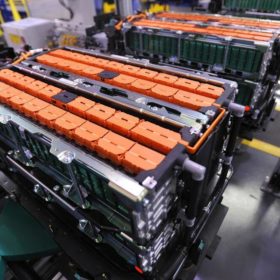
Novel nanomaterial to replace graphite in lithium-ion batteries
Porous nanostructured microspheres made of copper, iron, and iron oxide were used by an international research team as negative anode material in lithium-ion batteries. The new technique is claimed to provide three times more capacity than batteries based on graphite anodes.
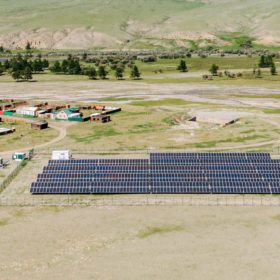
LCOE of off-grid solar-plus-storage in Russia’s remote areas ranges between $0.19 and $0.29/kWh
Off-grid PV has become a much more viable solution than diesel power generators to bring electricity to Russia’s remotest regions. Furthermore, solar-plus-storage is able to deliver with no interruption 24 hours per day and seven days per week, while fuel availability means diesel power can only ensure between four and seven hours per day.
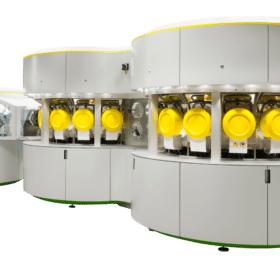
Midsummer ships CIGS production line to Russia
The production equipment was bought by Russian nanotechnology specialist Rusnano. The line will be used to produce BIPV modules at a factory in the Republic of Mordovia.

Russia to tender 500 MW of solar in 2021
The country’s cumulative installed PV capacity reached 1.7 GW at the end of 2019, as a result of the grid-connected projects tendered by the Russian government between 2014 and 2019. The remaining 500 MW quota of the 2.2 GW tendering scheme should be assigned this year.
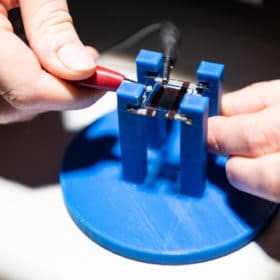
Inverted perovskite solar cell with transition metal carbides achieves 19.2% efficiency
A Russian-Italian research group has developed a two-dimensional transition metal carbide, known as MXenes, to collect photocurrent in perovskite cells. The cells were built with an inverted configuration and are based on a nickel(II) oxide hole transporting layer. The scientists claim that the doping technique allowed them to increase the efficiency of the cell by more than 2%.
