
Eritrea secures $50 million for 30 MW solar plant with 30 MWh of storage
The African Development Bank funding will help the country in achieving its 2030 target of increasing electrification and supplying 20% of electric power demand through renewable energy sources.
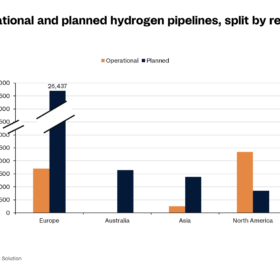
The Hydrogen Stream: Global pipeline projects to surge by 2035, says Rystad
Norwegian consultancy Rystad Energy says that hydrogen pipelines will be “far better” than vessels at moving hydrogen over short- and medium-range distances in the years ahead.
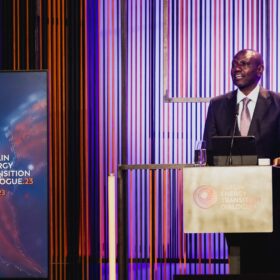
Missing investments jeopardize energy transition, says IRENA
The International Renewable Energy Agency (IRENA) told Berlin Energy Transition Dialogue participants this week that $5.4 trillion of annual investment is needed to support the global shift to renewables. Kenyan President William Ruto, meanwhile, called for a fair energy partnership between Europe and Africa.
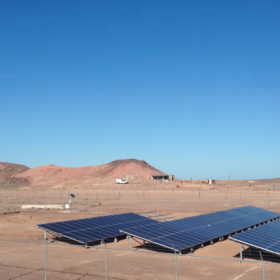
Minigrids edging closer to profitability
The minigrid space continues to attract a lot of attention from development partners in Africa. Minigrids can actually generate profits, so there is no doubt that commercial finance players will eventually jump on the bandwagon, according to the Africa Solar Industry Association (AFSIA).
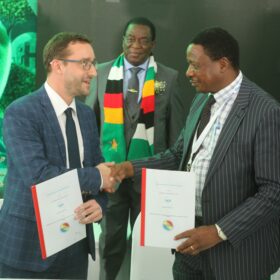
The Hydrogen Stream: Zimbabwe to develop first utility-scale plant
HDF and ZETDC have signed Zimbabwe’s first utility-scale green hydrogen power plant, with 178 GWh of expected annual electricity production. Rystad Energy, meanwhile, says Africa’s total electrolyzer pipeline has hit 114 GW.
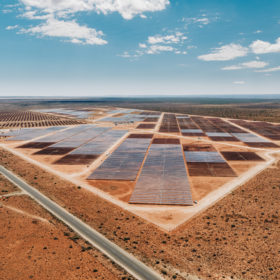
South Africa launches tender for floating, ground-mounted PV
The South African government is looking for independent power producers to build and operate floating or ground-mounted PV projects at selected government waterworks infrastructure or damns. The projects should be operational for 20 years.
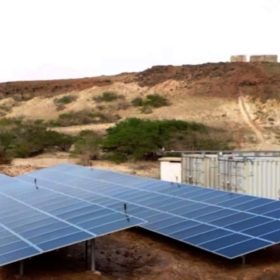
Cape Verde kicks off tender for 3.4 MW of solar
The government of Cape Verde is seeking developers to build four solar plants across four islands in the archipelagic nation.
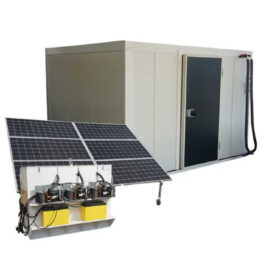
Solar-powered cooling solution for off-grid applications
Phaesun and Solar Cooling Engineering have developed a PV-powered cold room for small-scale farmers in Africa. The solution, which has been installed at a farm in Kenya, includes a 2.8 kW solar array and vapor compression heat pumps.
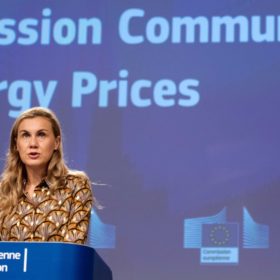
The Hydrogen Stream: Europe to launch hydrogen auctions
The European Commission says it will set up the new European Hydrogen Bank by the end of this year, with additional plans to hand out 10-year contracts in a new hydrogen auction. Linde Engineering, meanwhile, is teaming up with several other companies to test solid oxide electrolyzer cells (SOEC) and ammonia cracking technology.
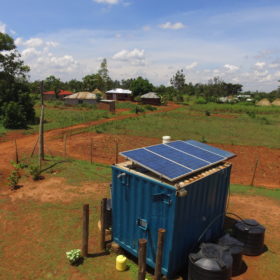
Kenya to combat rural energy access gap with over 130 solar minigrids
Kenya’s government plans to build 137 solar minigrids across remote locations in the East African country. The project received $150 million in funding from the World Bank.
