
AfDB provides $200 million to expand Nigerian power sector
The African Development Bank has agreed to invest $200 million to improve electricity access in Nigeria by building minigrids throughout the country.
Electricity access aims prompt fresh $120m in loans and grants for African off-grid solar
Benin has obtained a $21.1 million loan from the investment and development bank of the Economic Community of West African States and Burundi will benefit from a $160 million World Bank donation, $100 million of which will be dedicated to solar energy.

Project developers can secure cash from new IRENA funding pot
The Climate Investment Platform launched by three multilateral bodies in September is now open for business and renewables companies in developing nations could qualify for help with clean energy facilities, renewables-related grid improvements and energy efficiency schemes.
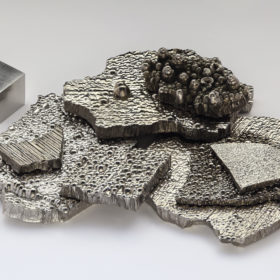
Restrictions on sourcing of cobalt are changing
The Democratic Republic of Congo (DRC) is one of the world’s most natural mineral rich countries, yet it is plagued with poverty, inequality, corruption, human rights violations and many more challenges. Mining for materials like cobalt is at the center of these. According to state-owned miner Gecamines, over 22% of the country’s GDP is generated in the mining sector, while 70% of the world’s cobalt is produced in the country.
Code-based modeling for PV of the future
A British-Nigerian team of researchers claims to have developed a code-based approach for solar modeling and simulation which could facilitate better decisions in PV tech research. The model can reportedly be applied to the study of solar thermodynamics, cell material characteristics, PV system design and power monitoring potential.
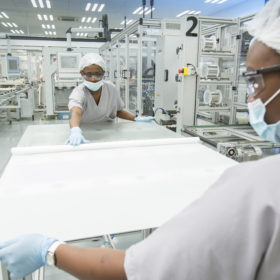
Module manufacturer responds to rumors of panel failures at 75 MW South African project
Reports of module under-performance at the Mulilo Sonnedix Prieska solar project have prompted a response from South African company Artsolar, one of the module suppliers for the plant. The project is said to be experiencing serious problems due to premature module degradation. Divian Govendar, CEO of Johannesburg-based Artsolar, said the company has not been required to replace any modules at the site.
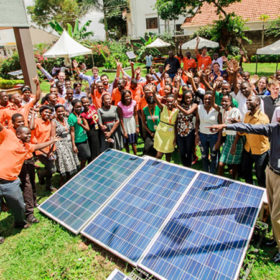
Off-grid solar changes lives – but could help many more of the world’s energy poor
A study has attempted to provide detailed analysis of the beneficial impact off-grid renewables, led by solar, are having on people in the world’s least developed countries.

Ghana’s first bilateral solar PPA
Plastic manufacturer Miniplast will buy electricity from a 704 kW grid-connected solar array owned and operated by Norwegian developer Empower New Energy AS.

Beijing to develop 500 MW of solar in Uganda
State-owned China Energy Engineering Corp Ltd said the PV capacity will be developed in two phases in a deal worth $500 million.
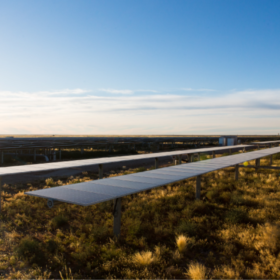
Reports of backsheet failures at 75 MW Mulilo Sonnedix Prieska solar farm in South Africa
The South African project is reportedly experiencing serious problems due to premature module degradation. Claims of extensive backsheet failure have emerged and it is said widespread module replacement will be required. The modules used in the project were supplied by Chinese manufacturer BYD and South African producer Artsolar.
